On July 1, the first step of the U.S. Department of Labor’s new overtime rule went into effect, meaning about 1 million salaried, white-collar workers currently exempt from overtime began receiving greater protections—a higher salary, new eligibility for overtime pay, or more time with their families, depending on how their employers respond. After the rule is implemented in full on January 1, 2025, more than 4 million workers will see these sorts of benefits.
The Department of Labor is responsible for establishing the minimum salary that a white-collar worker must earn to be exempt from overtime pay requirements for working more than 40 hours per week. Yet that value has eroded over time. The new overtime rule will restore the historical function of the salary threshold, raising it from $35,568 per year to $43,888 per year on July 1, and again to $58,656 per year on January 1, 2025. The rule also provides for regular adjustments to the salary threshold every 3 years to account for the latest data and avoid large swings in the future.
Undoubtedly, this new rule is a much-needed step forward to empower workers in the United States. But executive action is only truly effective for equitable economic change if it has an impact across all communities—including those that are too often left behind. What’s especially notable about the new rule is that the Labor Department had access to detailed data during the policymaking process to ensure that the new rule would make a difference for Black workers, Hispanic workers, and women workers—a big deal in advancing equity.
While this may seem like standard practice, it actually represents a significant change that we now have a demographic breakdown of these impacts. Scholars, researchers, and advocates have long pressed for governments to better measure the effects of executive action on underserved communities.
Late last year, the White House Office of Management and Budget updated the government’s internal guidance for preparing cost-benefit analysis of regulations to do just that. This seemingly wonky step toward transparency will help us better understand the stakes when it comes to executive action. In line with this cost-benefit guidance, the Department of Labor also included a distributional analysis in the new rule’s Regulatory Impact Analysis of how it will affect workers, broken down by sex, race, ethnicity, age, and even level of education.
To be sure, this new overtime rule isn’t the first to describe demographic impacts. The Occupational Safety and Health Administration’s emergency temporary standards for COVID-19 in healthcare compiled the available literature on increased workplace risks for workers of color. The Wage and Hour Division’s new independent contractor rule outlined the disproportionate representation of workers of color in occupations and industries where misclassification is most prevalent.
Other agencies outside of the Labor Department have conducted similar analyses, too. The Environmental Protection Agency, for instance, highlighted in its heavy-duty engine and vehicle standards that people of color and people with lower incomes would benefit more than others, in part because they are more likely to live in areas of lower air quality to start.
But this executive action on overtime takes evidence-based policymaking to the next level. The new rule will be particularly impactful because it builds upon past regulatory efforts to focus the greatest impact on those who have been historically marginalized, not only by harnessing demographic data to illustrate the effects, but also because of the striking scope of the rule’s impact. This executive action will give new protections to 19.6 percent of white-collar, salaried women left out of the law today. Likewise, 21.7 percent of comparable Black workers and 19.5 percent of Hispanic workers will have new protections.
Put another way, the new overtime rule will extend protections to nearly 1 out of every 5 Black, Hispanic, and women white-collar workers who are currently exempt from overtime.
As with many executive actions, the overtime rule faces court challenges intended to stop it in its tracks, and one court has already blocked its implementation for a small number of Texas public employees. Even so, the overtime rule is blazing the trail for measuring the impact of regulations in the future. By institutionalizing this new rule’s cost-benefit analysis practice, we can help ensure that all executive actions are not only effective, but also crafted to ensure that economic gains are shared by all of our nation’s workers.
Did you find this content informative and engaging? Get updates and stay in tune with U.S. economic inequality and growth!
Several provisions of former President Donald Trump’s 2017 tax cuts are set to expire next year, providing an opportunity to reimagine how federal taxes can both raise additional revenue for critical public investments and ensure the U.S. economy is working for all—not just the privileged few. Replacing the failed “trickle down” tax policies of the past will require both robust evidence and creative vision.
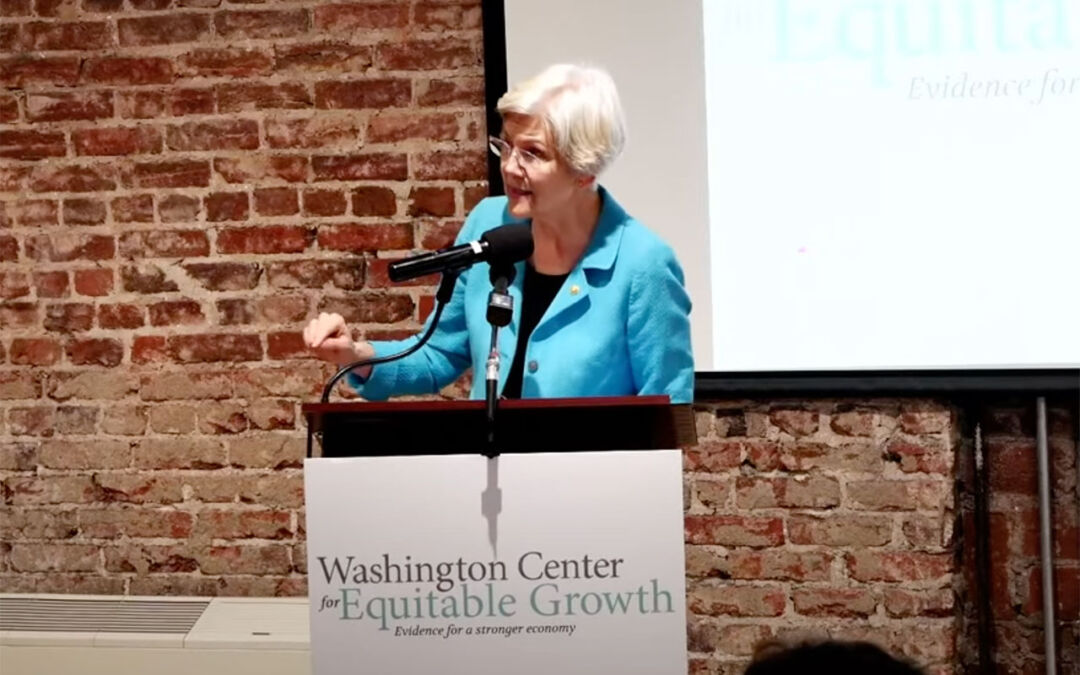
On June 17, the Washington Center for Equitable Growth hosted an event titled “The Promise of Equitable and Pro-Growth Tax Reform,” gathering academics and policymakers, as well as journalists and tax experts, to discuss potential changes to the tax code in 2025 and to showcase the best research on how to achieve equitable, pro-growth tax reform. The event, held at the National Union Building in Washington, DC, featured a keynote address by Sen. Elizabeth Warren (D-MA), followed by a panel of tax policy experts and closing remarks from Daniel Hornung, deputy director of the White House National Economic Council.
After opening remarks from Equitable Growth Senior Fellow David Mitchell, Sen. Warren kicked things off with her call to be prepared to fight for tax reform. She focused on how the tax code is a reflection of a country’s values—and how the current federal tax code reflects the values of the very wealthy and big corporations. She cited the upcoming presidential election as a key factor in the policy negotiations around the expiring provisions of the Tax Cuts and Jobs Act of 2017, and urged policymakers to prioritize making the tax code more equitable for middle class families by getting billionaires and corporations to pay their fair share in taxes.
Sen. Warren also highlighted the importance of funding the IRS to go after tax cheats and the widespread tax evasion that is common among the top 1 percent of income earners. The loopholes in the U.S. tax code that enable this tax evasion also ensure that the rich become richer and continue to accumulate both wealth and political power.
Equitable Growth Senior Policy Fellow Michael Linden then introduced the panel of tax policy experts: UCLA School of Law’s Kim Clausing, University of Maryland’s Daniel Reck, Yale Law School’s Zachary Liscow and Natasha Sarin, and Nadiya Beckwith-Stanley of Skadden, Arps, Slate, Meagher & Flom LLP and Affiliates. The panelists covered three broad topics—business taxation, taxing wealth, and tax law enforcement—before turning to an audience question-and-answer session.
Linden first turned the panel’s attention to wealth taxation, diving into why taxing capital is so important to making the tax code more equitable. Beckwith-Stanley explained how harmful it is that the U.S. government taxes capital differently than it taxes labor income, and highlighted a few policy areas for improvement: different rates of taxation and when capital is taxed.
Liscow discussed his proposal to close the billionaire borrowing loophole, or taxing the very wealthy who use their financial assets as collateral to borrow money and then pay little—or no—taxes on the cash they use to finance their lifestyles. His research shows that closing this loophole would raise about $100 billion over 10 years. Sarin then hit upon the inefficient nature of the way capital is currently taxed, urging policymakers to think about this problem, as well as the arguments for raising revenue.
On taxing businesses, Linden focused on provisions of the Tax Cuts and Jobs Act that benefitted corporations without improving worker well-being, particularly cuts for pass-through businesses that exacerbated inequality. Clausing discussed how the Trump-era tax cuts did not have a large-scale effect on wages, economic growth, or investment, but did disproportionately benefit the wealthy and big corporations. She highlighted that the U.S. corporate tax base is very concentrated, meaning that adjusting the corporate tax rate would have a big impact on revenue without affecting the vast majority of taxpayers.
Linden then asked Reck to explain how his research on tax evasion by the wealthy shows how rich people often use specific business structures to shield their wealth from taxation, taking advantage of loopholes in the tax code to create more loopholes that allow them to continue to avoid taxes. Reck echoed Sen. Warren’s calls for Congress to continue funding the IRS, saying that this funding is essential to catching these tax evasion schemes and ensuring the wealthy pay what they should.
The panelists then discussed the importance of enforcing tax law and why further IRS cuts would undermine the government’s ability to restore fairness in the U.S. tax code. Sarin detailed the decades-long draining of IRS resources that hindered its ability to enforce the law, and how that reduced the audit rate of pass-through businesses to zero percent, incentivizing companies to continue to exploit loopholes in the law.
Beckwith-Stanley also raised the issue of racial disparities in IRS audits, and highlighted the nuance of this issue of IRS funding. Sarin then also talked about how many low-income communities are wary of accessing all of the income support programs to which they are entitled out of fear that the IRS—a law enforcement agency—would come after them in an audit.
Panelists then each listed one policy proposal they would like to see enacted. Liscow raised his proposal to tax the billionaires borrowing loophole, while Clausing pushed for taxing corporations at the entity level. Sarin mentioned a permanent expansion of the Child Tax Credit to lift millions of U.S. children out of poverty. Beckwith-Stanley highlighted the importance of making any change to the tax code permanent rather than continuing to pass short-term changes that have to be renegotiated after a few years.
After wrapping up a lively Q&A section that covered tax rates as a share of Gross Domestic Product, research on partnerships and pass-through income, using the tax code to shape corporate behavior, and key principles to follow going into tax policy negotiations in 2025, the National Economic Council’s Hornung delivered closing remarks. He laid out various problems with the Trump-era tax cuts, particularly their contributions to the federal deficit and economic inequality.
Hornung then highlighted the importance of reorienting the tax system to promote shared growth and economic opportunity. He said policymakers need to address structural issues in the tax code alongside demographic shifts that require them to raise more revenue to ensure the federal government can sustainably invest in social programs. He reiterated how centering these goals would not only address the failures of the Trump-era tax cuts but also make the U.S. tax code work better for the middle class and fairer overall.
Did you find this content informative and engaging? Get updates and stay in tune with U.S. economic inequality and growth!
On June 19, 1865, emancipation was officially declared in the state of Texas, more than two full years after the Emancipation Proclamation and more than two full months after the pro-slavery rebellion was defeated in the Civil War. This day, thereafter called Juneteenth, marked the real end of the juridical and economic system of slavery in the United States, but in reality the political struggle for freedom continued and continues to this day in new forms.
Tomorrow, we celebrate this emancipation. But it is also a time for reflection on the legacies of freedom deferred.
To mark the day, we are highlighting some recent research on the state of economic mobility for Black Americans. While not an exhaustive list, these studies demonstrate both the long history of the aftermath of slavery and the persistence of racial inequality that continues to shape the U.S. economy and society.
New findings on restricted economic mobility for Black Americans
Two recent studies utilize new methodological innovations to examine the relationship between economic mobility and racial inequality, helping to shed light on the different ways mobility is continually restricted for Black Americans.
A 2022 working paper by Princeton University economist Ellora Derenoncourt analyzes the impact of the Great Migration of Black Americans out of the South in the early to mid-20th century on the future generations of these migrants. She constructs a novel database using several large data sources, including data on local government expenditures, private schools, crime, incarceration, and other variables spanning the period 1920 to 2015, as well as assembling U.S. Census data from 1900–1940.
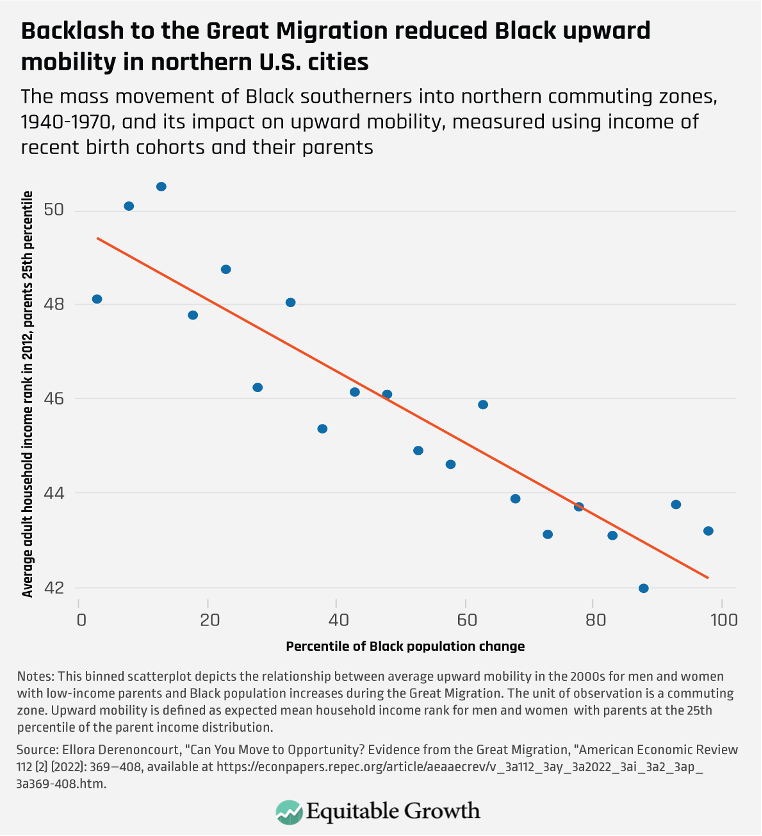
Derenoncourt finds that the gains accrued by the first generation of Black Americans during the Great Migration dissipated with future generations. In fact, by the third generation, she finds that Black Americans whose grandparents migrated from the South to the North in the early 20th century have the same or worse economic outcomes as Black Americans whose grandparents did not move away from the South.
Derenoncourt explains that this erosion is due, at least in part, to backlash to the Great Migration, including racial terror, in Northern cities, where segregation was entrenched through White flight to the suburbs and public investments were siphoned from social infrastructure to policing.
According to Derenoncourt, without this backlash, the Black-White mobility gap would be 27 percent smaller. (See Figure 1.)
Figure 1
Moreover, economist Randall Akee of University California, Los Angeles, and the U.S Census Bureau’s Maggie Jones and Sonya Porter employed a new research strategy to analyze the trend of increased income inequality and decreased mobility by examining differences between and within racial and ethnic groups. The authors created a novel dataset using administrative tax data linked at the person level and Census Bureau data on race. This unique method enabled Akee and his co-authors to overcome limitations that previous research on mobility and race experienced, such as small sample sizes, as well as other general limitations with survey data.
As a result, the authors find significant income stratification by race and a generally fixed income distribution over time. Specifically, from 2000 to 2014, all the groups the authors examined experienced higher levels of within-group inequality over time. White and Asian Americans experienced the highest levels of intra-group inequality and the lowest levels of intra-group mobility. The opposite was true for Black, American Indian, and Hispanic Americans, all of whom experienced low within-group inequality and high within-group mobility.
Yet the authors find that the latter three groups have the lowest levels of intergroup, or overall, mobility across different groups within the U.S. population and the highest probability of downward mobility, relative to White and Asian Americans. The findings paint a picture of a calcified income structure in which Black, American Indian, and Hispanic individuals are persistently clustered at the lower end of the income distribution, while White and Asian Americans tend to be on the higher end.
New research on racial disparities in access to income supports
While there are numerous mechanisms restricting economic mobility for Black Americans, the COVID-19 pandemic recession—and the policy responses to it—provided an opportunity for researchers to analyze a specific factor: the current system of income support programs.
In the United States, income supports are a standard, though inadequate, means of addressing some of the consequences of entrenched economic inequality and precarity. These programs help ensure that U.S. households have the income they need to cover their basic expenses, either in the form of direct cash transfers (such as with Temporary Assistance to Needy Families or Unemployment Insurance) or by providing essential goods (such as food or housing) to families, freeing up income to be used for other necessities. Unemployment Insurance, for example, provides direct support for workers during times of economic distress, ideally mitigating the loss of income during downturns and the long-term harm of unemployment on economic well-being and mobility.
Yet racial inequities in accessing these programs persist, which can result in further restricting the mobility of Black Americans. This was no different amid the COVID-19 recession, despite emergency funds and temporary expansions of several income support programs to mitigate the effects of the recession.
For instance, economists Eliza Forsythe and Hesong Yang of University of Illinois, Urbana-Champaign find that disparities in receiving UI benefits by race persisted despite expansions to Unemployment Insurance through the Coronavirus Aid, Relief, and Economic Security, or CARES, Act in 2020. As a percentage of eligible recipients Black UI-eligible workers were less likely to receive benefits than White UI-eligible workers by as much as 8 percentage points.
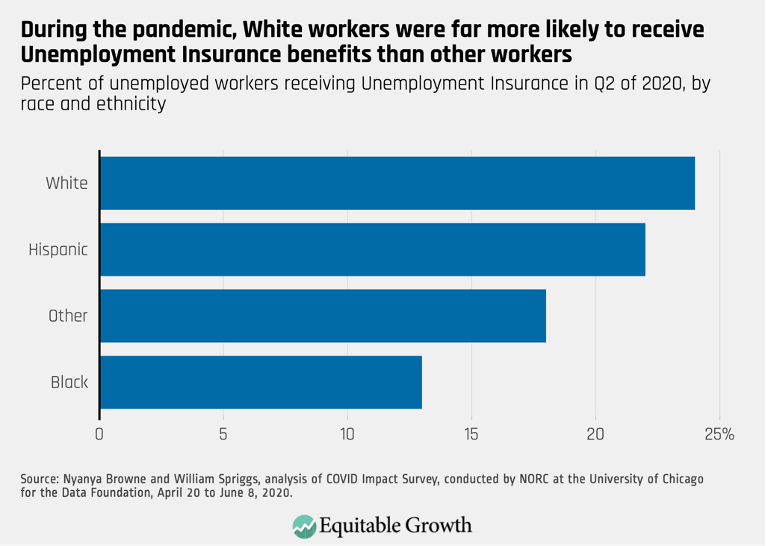
Other recent research examining the COVID-19 recession confirms the persistence of racial disparities in receiving UI benefits. In an analysis of survey data between April 2020 and June 2020, economists Nyanya Browne and (the late) William Spriggs of Howard University find that Black workers were approximately half as likely to receive UI benefits as White workers, with 13 percent of Black workers receiving such benefits, compared to 24 percent of White workers. (See Figure 2.)
Figure 2
To be sure, racial disparities in UI recipiency are longstanding, and these discrepancies prior to the COVID-19 recession are well-documented. For instance, in an analysis of data from 1986 through 2015, economists Elira Kuka of George Washington University and Bryan Stuart of the Federal Reserve Bank of Philadelphia find that Black workers were 24 percent less likely than White workers to receive UI benefits.
In addition to racial inequities in accessing Unemployment Insurance, there are also longstanding gaps in the amount of UI benefits received. Economists Daphné Skandalis of the University of Copenhagen, Ioana Marinescu of University of Pennsylvania, and Maxim N. Massenkoff of the Naval Postgraduate School studied the UI replacement rate, or the unemployment benefits received relative to prior earnings. They find in their analysis of 2002–2017 data that the UI replacement rate over that period of time was 18.3 percent lower for Black claimants than White claimants.
When examining the factors contributing to this gap, Skandalis and her co-authors find that after adjusting for work history, which can impact prior earnings that need replacement and the likelihood of losing one’s job, the replacement rate for Black claimants was 8.4 percent lower than White claimants. This gap is due entirely to differences in state rules concerning Unemployment Insurance.
The authors also find that the share of Black UI claimants is negatively correlated with the amount of UI benefits. Their analysis finds that weekly UI benefit amounts decrease by $9 for every 10 percentage point increase in the share of Black UI claimants.
Conclusion
Juneteenth offers a chance to celebrate the end of slavery and also to reflect on how far we still have to go to achieve fairness and equality in the United States. These recent studies illuminate the many ways in which racial inequities persist in the U.S. economy, hampering economic mobility for Black Americans and reinforcing longstanding income and wealth inequality.
Did you find this content informative and engaging? Get updates and stay in tune with U.S. economic inequality and growth!
The Washington Center for Equitable Growth today launched our new Nonresident Scholars program. This is our latest way of connecting academics to policymakers to ensure public policy debates are grounded in economic evidence. The researchers in this program will serve as go-to resources for media and policymakers on a variety of issues, from tax policy to family and labor policy to macroeconomic trends.
The 2024 Nonresident Scholars cohort includes 11 researchers from Equitable Growth’s academic network spanning disciplines, institutions, and career stages. These scholars will be available to offer analysis on timely developments in their fields of expertise. They have a long history of rigorous economic research at the intersection of inequality and growth—expertise that will enable them to respond to events and help guide policy discussions.
Below, we detail each of the scholars’ research background and highlight some of their recent work, including what they’ve studied and written about for Equitable Growth.
Elizabeth Oltmans Ananat Barnard College
Elizabeth Oltmans Ananat is the Mallya Professor of Women and Economics at Barnard College and a 2019 Equitable Growth grantee. Her research focuses on the causes and consequences of intergenerational transmission of poverty and inequality. Ananat’s work on schedule stability shows that Fair Workweek laws benefit workers and improve their health and sleep quality without sacrificing the number of hours they work each week. Her surveys of workers amid the COVID-19 pandemic, alongside work examining racial disparities in access to Unemployment Insurance, highlights the importance of investing in social infrastructure to support workers and bolster the broader economy.
Carlos Fernando Avenancio-León University of California, San Diego
Carlos Fernando Avenancio-León is an assistant professor of finance at the University of California, San Diego and a 2018 Equitable Growth grantee. His work looks at how complex institutional structures mask or generate inequality, with a particular focus on the relationship between political or financial institutions and economic redistribution among disadvantaged populations. Recently, he examined how strong unions reduce risky debt among U.S. firms, thereby also lowering the risks of unemployment for U.S. workers. His study on property tax assessments shows vast inequality for Black and Latino homeowners, who face a heavier local property tax burden than their White neighbors. Another study of his focuses on how the Voting Rights Act affects economic inequality in the United States, finding that the landmark legislation significantly narrowed the wage gap between Black and White men, particularly in the South, between 1950 and 1980.
Arindrajit Dube University of Massachusetts, Amherst
Janet Gornick is the director of the Stone Center on Socio-Economic Inequality and a professor of political science and sociology at the City University of New York Graduate Center. Her areas of expertise are in gender and work, income inequality, and social infrastructure policy. Her recent work on the gender wage gap compares earnings disparities for women in 12 countries based on their educational achievement, finding that the wage gap is persistent despite gains in educational attainment among women. Gornick’s 2022 co-authored book on mobility details 23 studies on income and wealth inequality to tease out the latest research and developments in income and wealth distribution analysis.
Andria Smythe Howard University
Andria Smythe is an assistant professor in the Department of Economics at Howard University and a 2020 and 2022 Equitable Growth grantee. Her research focuses on student debt and labor market outcomes, public investments in higher education, recessions and labor market inequality, intergenerational disparities in upward mobility, and the impacts of intergenerational transfers of wealth and wealth-building opportunities. Smythe also has written on the future returns to attending college, particularly looking at long-term outcomes and well-being for those who go to Historically Black Colleges and Universities. She finds that HBCU students are more likely to receive a bachelor’s degree and have higher incomes at age 30 than those who do not enroll in HBCUs.
Nirupama Rao University of Michigan
Nirupama Rao is an assistant professor of business economics and public policy at the Ross School of Business at the University of Michigan and a 2019 Equitable Growth grantee. Her work centers on the economic effects of fiscal policy, with a particular eye toward the impact of policy on firm production, investment, and pricing decisions. Her research examining whether tax credits work to stimulate research-and-development spending finds that the average firm does increase R&D spending over time as it gets cheaper to do so. Her other work examines how regulation and taxation interact in alcohol and other “sin product” markets such as sugary beverages and cigarettes, and how low-income, older, and less educated households bear the brunt of these “sin taxes” with implications for policymaking.
Daniel Reck University of Maryland
Daniel Reck is an assistant professor of economics at the University of Maryland and a 2018 Equitable Growth grantee. His research interests include tax evasion and behavioral welfare economics. Reck’s ongoing work on tax evasion at the top of the income distribution finds that the wealthiest Americans use extremely sophisticated means of evading taxes, resulting in significant underestimates of their incomes and thus underpayment of taxes among the rich. In another paper, he reviews research on tax evasion and avoidance, and ways the IRS can combat this problem by investing in tax enforcement efforts, particularly aimed at offshore evasion and exploitation of grey areas in tax law.
Jacob Robbins University of Illinois at Chicago
Jacob Robbins is an assistant professor of economics at the University of Illinois at Chicago, as well as a former Equitable Growth dissertation scholar and a 2016, 2020, and 2021 Equitable Growth grantee. His areas of focus are inequality and macroeconomics, specifically using theory and data to understand key economic trends such as monopoly power and secular stagnation. During the COVID-19 pandemic, his work using real-time data to monitor spending inequality enables policymakers to react to how consumers are acting during a crisis compared to their habits beforehand so that policies can effectively intervene and reduce economic hardships. He recently developed a model of recessions using fluctuations in optimism or pessimism about future output, or animal spirits.
Jesse Rothstein University of California, Berkeley
Jesse Rothstein is a professor of public policy and economics at the University of California, Berkeley and a 2018 Equitable Growth grantee. His research examines education policy, tax and transfers, and the labor market. Recently, he has focused on school finance, intergenerational mobility, and regional and industry wage differentials. Rothstein’s work on social infrastructure programs and the benefits of the public provision of care and social insurance shows that a greater public role in protecting families would improve U.S. families’ living standards and boost the overall U.S. economy. His work on the Great Recession and its longer-term impacts on U.S. workers highlights the importance of strong public policies in the face of downturns to prevent scarring and other economic ramifications.
Mark Zandi Moody’s Analytics
Mark Zandi is the chief economist of Moody’s Analytics, where he directs economic research. His research interests lie in macroeconomics, financial markets, and public policy, with a recent focus on mortgage finance reform and the determinants of mortgage foreclosures and personal bankruptcy. He also analyzes the economic impact of various tax and government spending policies, as well as appropriate monetary policy responses to economic activity and the disconnect between consumer sentiment and economic statistics. Lately, he has also written about the housing affordability crisis in the United States, offering policymakers suggestions that would increase housing supply and reduce the high cost of housing.
Social science researchers play an important role in the policymaking process. Researchers help policymakers at all levels of government to understand key trends and issues in the U.S. economy and society, produce important descriptive facts about the world that can inform policy responses, and track the past or project future impacts of policies on key outcomes and populations.
For social scientists to have this kind of impact on policymaking, they need to produce research that speaks to the issues, questions, and priorities that are relevant to policymakers. What are the types of social science evidence that are most helpful to government decision-makers? And how can researchers find out the issues and questions that are most likely to be relevant to government agencies?
This resource guide addresses both of these questions, focusing on the federal government and social science research. It presents the different ways that federal agencies often use social science research when formulating policies, implementing new programs, evaluating policies’ impact, and communicating with the public, using recent examples from the Biden-Harris administration. It also details a variety of publicly accessible and regularly updated resources where researchers can learn about federal agencies’ current and longer-term priorities, pointing to research topics or questions that could help social scientists conduct relevant work for decision-makers, including both political leaders and career civil servants.
Throughout the guide, I draw on my own prior experience serving in the Biden-Harris administration at the U.S. Department of Labor and the White House Office of Management and Budget, where I was often in the role of translating social science research to aid policy decisions in those agencies. While many of my examples come from those agencies as a result, I also include examples from other agencies.
How social science research is used by federal policymakers
There is no one single type of policy-relevant social science research. During my time in the federal government, my colleagues and I drew from qualitative and quantitative work across many disciplines.
That said, there are three broad categories of social science research that were used on a regular basis: theory or concept development, descriptive facts, and policy impacts. Together, these three types of social science research can help policymakers identify new areas of policy need or action, build the case for one type of policy design or intervention over others, estimate the impacts of a policy change, and defend a policy choice when policymakers have decided to pursue it. Let’s look at each in turn.
Theory or concept development research
New theories or concepts can be helpful for policymakers as lenses through which to view social or economic trends and developments and make sense of otherwise disparate or disconnected phenomena. In the process, social scientists can help policymakers understand new policy problems that might not have previously registered with them or new ways of organizing policy responses into a more coherent framework.
One good example of the value of social scientific frameworks for the Biden-Harris administration comes from academic work on so-called administrative burdens, or the material, time, and psychological costs that individuals encounter when attempting to access and use public services and benefits. This framework provided leaders and staff at the Office of Management and Budget with a new way of approaching their work on customer experience and paperwork review and a new way of working with federal agencies to better describe barriers in access to social programs.
Descriptive fact research
Rich empirical description is often undervalued in academic journals, but it is essential to the work of government and the policymaking process. Social scientists can document trends, prevalence, and key affected groups in ways that help policymakers understand potential policy problems and responses, and then allocate attention and target resources effectively.
Research documenting significant racial and ethnic disparities in access to Unemployment Insurance at the start of the COVID-19 pandemic, for example, helped to inform the U.S. Department of Labor’s efforts to broaden access to the UI system through new grant initiatives to state unemployment agencies.
Policy-relevant descriptive work need not be quantitative. Indeed, qualitative scholarship documenting through interviews that many food assistance beneficiaries were not aware of new flexibilities available to them through pandemic-era policy waivers helped to inform a push toward greater awareness-building of later relief initiatives.
Policy impact research
Empirical social science work also can help policymakers understand past effects or project future impacts of policy changes. This could mean, for instance, examining the roll-out of policies across states and examining impacts on relevant social and economic outcomes. This kind of analysis can then inform potential federal policy changes. When the U.S. Department of Labor was proposing an increase in the minimum wage for federal contractors to $15 an hour, for example, the department drew from research studying recent increases in the minimum wage across states and cities to shape its policy and decision-making.
Policy impact studies also can include formal program evaluations. Research on registered apprenticeships showing their impact on underserved participants’ longer-term wages and employment, for instance, have informed the U.S. Department of Labor and other executive branch decisions to scale-up funding for such training opportunities.
Another important tool from social science for assessing policy impacts are economic models that can help policymakers project the estimated impacts of different policy alternatives on relevant outcomes. For instance, the Biden-Harris administration has taken important actions to incorporate the environment and natural resources into the system of accounting for economic statistics. Yet much more remains to be done to integrate the different economic impacts of climate change on projected outcomes related to the labor market and economic productivity. This is a very relevant area of future research for social scientists.
Similarly, much more work could be done to ensure that economic models sufficiently disaggregate data between social and economic groups—for instance, by race or geography—so that policymakers can better understand the distributional impacts of proposed government actions.
Other things to know about the role research plays for federal policymaking
One question that researchers might have when considering connecting their research with policymakers is the stage at which their research should be to be helpful. The answer varies, depending on the ways that policymakers are using research. The baseline criteria for sharing research is that researchers should feel confident enough in their findings and conclusions, especially if they have not yet been published.
Sometimes, for early-stage decisions, policymakers are looking for any relevant work on a particular issue, even unpublished work. As the policy process proceeds, especially for formal processes such as those for regulations, it becomes more important to have a broad base of published research in credible outlets, not just one study (or unpublished research).
In some cases, federal agencies need to publicly document how they use social science research, as with federal regulations where agencies are legally required to “show their work” and provide empirical citations and evidence to defend their particular policy design choices and estimated impacts. In other cases, federal agencies may rely on social science in less visible—but no less important—ways, such as when policymakers are considering alternatives early on in the process of planning initiatives. This means that even when research is not cited outright, it can still make a big difference for the government.
Where can researchers learn about federal agency priorities?
Research on how social science informs policymaking suggests that social science findings tend to have the biggest impact when they are relevant and aligned with issues and priorities on which agencies are already focused. That said, social scientists may not know what is relevant to federal agencies and policymakers at any given moment if they haven’t worked closely with federal policymakers in the past.
An added obstacle is that government officials, especially political leaders, are limited in what they can share publicly about planned activities or priorities that an agency is still deliberating. Agency staff generally do not share so-called pre-decisional information with the public.
The good news is that the federal government regularly produces documents that clearly define the areas in which agencies are currently focused and where agencies might focus in the future. These documents are sometimes difficult to find. Below, I run through various ways interested social scientists can figure out where to find them and how to use them to identify policy-relevant research questions and topics.
Before diving into these areas, however, some things to keep in mind are how “evergreen” agency priorities are likely to be and the timeline on which receiving new research may be helpful. This is important for researchers to consider, given the time it takes to launch and complete new research projects relative to the timeline on which findings might be relevant for agency decision-makers. In some cases, policy research will be helpful for agencies regardless of the short-term priorities of agency leaders. In other cases, though, topics may be more short-lived, given the specific political priorities of one presidential administration or agency leader.
Agencies’ or officials’ public statements
The first place where researchers can find current government priorities are the public statements made by administration and agency leaders. These statements can provide good insight into the shorter-term issues and priorities that an agency is pursuing—though these topics are likely to be less evergreen than those found in other sources. They also may be more likely to be backward looking, describing work an agency has already decided to do, rather than forward looking.
Nevertheless, these public statements—such as speeches, blog posts, or news releases—can orient researchers to the broad topics, positions, and policy areas where an agency’s leadership is focused. Looking at the U.S. Department of Labor’s blog, for example, a researcher could see that the department’s leadership is focused on issues that include equitable access to Unemployment Insurance, paid family and medical leave expansion, worker misclassification, and labor-management partnerships.
Another example is a recent White House’s briefing room statement from the president about the importance of protecting career civil servants from political interference as part of the administration’s priorities for combating corruption and defending democracy.
Agencies’ evaluation and evidence-building plans
Researchers can also look at the research questions that agencies themselves have defined as being relevant to their short- and long-term priorities. As part of the Foundations for Evidence-Based Policymaking Act of 2018, federal agencies provide regular plans detailing their significant evaluation activities, as well as longer-term plans for identifying priority questions, only some of which they will evaluate themselves.
The latter document—sometimes called a learning agenda—can be a very helpful resource, laying out the research questions that agencies have identified as being important and relevant. These research questions usually reflect a mix of short-term political priorities, as well as longer-term questions relevant to agencies. Researchers can find these documents on agencies’ own websites or centrally at www.evaluation.gov. Examples include:
Looking through the U.S. Department of Labor’s Evidence Building Plan for fiscal years 2022–2026 researchers can see that the department calls out a need for more research on how the Occupational Safety and Health Administration can build stakeholder partnerships with community, faith, and educational organizations or institutions to help the agency reach underserved or vulnerable workers.
In the U.S. Department of Housing and Urban Development’s learning agenda, researchers can see that agency staff have helpfully ranked research questions in order of their priority to the agency, listing some areas—such as understanding the risks to indoor air quality in HUD-funded housing or what an expanded Federal Housing Administration role in financing multifamily housing could look like—as top priorities.
The U.S. Department of the Treasury has issued a learning agenda specifically tied to the economic recovery and relief programs the government has launched since the onset of the COVID-19 pandemic. It indicates that the agency is especially interested in collaborations with external researchers who can contact the department directly for such opportunities. Areas of particular interest include the distribution of Emergency Rental Assistance funds to tenants across the United States and whether the distribution was equitable, lessons for preventing evictions nationwide, and the impact of the funds on housing stability and well-being of recipients.
Agencies’ strategic plans
To understand an agency’s longer-term priorities, another good resource is its strategic plan, which agencies are required to produce every 4 years as a result of the Government Performance and Results Act of 1993. A strategic plan is intended to be an accessible framework for agencies to define key priorities and then assign specific indicators for tracking those initiatives over time.
Researchers can use these documents to understand the issues that an agency is likely to tackle over the course of a presidential administration and the specific responsibilities that individual subagencies within an agency in order to meet the agency’s and the administration’s overall goals. Like the evaluation plans described above, these topics include a mix of top political priorities, as well as longer-term priorities that are likely to be relevant for the agencies over several years (if not longer). These plans are available on individual agency websites, as well as housed centrally by the Office of Management and Budget at www.performance.gov.
Looking through the U.S. Department of Labor’s strategic plan for fiscal years 2022–2026, we can see that the Women’s Bureau (a subagency within the department) is interested in understanding best practices for hiring and retaining women in the trades and expanding initiatives to help formerly incarcerated women reenter the workforce.
Similarly, the Office of Management and Budget’s performance team has listed some areas, such as improving the delivery of government services, as being overarching priorities for all agencies that researchers may consider when choosing research topics.
Agencies’ budget requests and congressional budget justifications
A third source of information about short- and longer-term priorities are the annual documents that agencies produce together with the White House to form the president’s budget request to Congress. These documents include detailed descriptions of what agencies and subagencies propose as new activities to meet the administration’s goals (and for which they are requesting new funding), as well as descriptions of how agencies and subagencies are using existing funding from Congress.
Together, the budget documents include valuable background information for researchers on what agencies are currently doing and their priorities for the coming years. It can be an especially helpful guide for researchers to grasp the responsibilities of specific agencies (and subagencies) and the statutes that govern those agencies so that researchers can understand which policies each agency oversees and whether policy changes might be possible, given the limits of current statutes. Researchers can find these resources on individual agency web pages, as well as on the Office of Management and Budget website for the president’s budget.
Looking through the U.S. Department of Labor’s congressional budget justification for the Wage and Hour Division in fiscal year 2024, for instance, researchers would see that one priority for this subagency is building connections with organizations that can serve as trusted intermediaries to underserved communities, including “delivering information in multiple formats and types of media tailored to the unique features of different populations, and finding ways to meet members of underserved communities outside traditional settings for [Wage and Hour Division] offices and outreach”—all topics that could be relevant for future research topics.
Agencies’ regulatory agendas
Another source of potential research questions and topics involves agencies’ regulatory development. Regulations are an important way that agencies implement statutes and carry out their work, and the regulatory process typically requires agencies to share a draft of their proposed actions with the public in what is known as a notice of proposed rulemaking. Agencies then solicit public comments and consider and address those comments in their final published regulation.
Throughout this process, social science plays a very important role since agencies are charged by the Office of Management and Budget with documenting empirically the likely impacts (including benefits and costs) of their proposal and other alternatives. Researchers have a critical role to play in improving the estimates of these impacts, including in ways that can better assess distributional impacts.
Notices of proposed rulemaking and the public comment process provide the clearest signal to researchers about areas where agencies are looking for specific feedback and input from academics. But researchers can also get a head start on the topics and issues that agencies are likely to address by using the biannual regulatory agenda, published by the Office of Management and Budget.
This document summarizes the regulations that agencies are either currently working on or are planning to work on in the coming months. The regulatory agenda is not necessarily comprehensive—agencies can always publish regulations that do not appear on the agenda or publish them sooner or later than forecasted—but it nevertheless offers a useful preview of the issues agencies are likely to tackle over a longer time period.
In the fall version of agenda, agencies also publish a regulatory plan that includes a narrative description of their regulatory priorities in addition to the individual, regulation-specific entries that appear in every agenda. There are several helpful guides available to understand how to craft effective comments, including from the Office of Management and Budget (for feedback on forms), as well as from researchers and other policy experts.
Agencies’ Requests for Information
Agencies often use formal Requests for Information to collect information from members of civil society, including researchers. These RFIs might ask for relevant studies, data, or experiences on a particular issue so that agencies can consider potential policy responses.
In implementing President Joe Biden’s historic executive order on advancing racial justice and equity, for instance, the Office of Management and Budget issued an Request for Information asking for input from the public on tools and approaches for measuring equitable administration of public benefits and services. Responses to that request then informed OMB’s work with agencies on implementing the executive order.
Requests for Information provide an opportunity for researchers to directly share their research and data with agencies and also help signal to researchers what topics agencies may be considering over the longer run. Early in the Biden-Harris administration, for instance, the U.S. Department of Labor issued a Request for Information around the hazards that extreme heat poses to workers, signaling that over the coming years the agency would be interested in pursuing both enforcement and regulatory development in this area.
Researchers can find Requests for Information as they are published in the Federal Register. To make sure that you don’t miss opportunities to submit RFI comments, you can subscribe to the Federal Register to receive email alerts when, for example, a specific agency issues a Request for Information or when an RFI mentions particular keywords.
Conclusion
As part of the Biden-Harris administration’s commitment to promoting pay equity, the White House recently announced that the federal government would be proposing new regulations to increase pay transparency and limit the use of salary history in setting compensation for federal contractors. The notice of proposed rulemaking advancing these proposals included a comprehensive set of references to social science research in economics and sociology—and it is clear that such research helped the administration both define the problems around pay equity and informed the design of potential policy responses. Now, researchers will have another opportunity to weigh in by providing comments on the proposed regulation.
This is just one example of the iterative ways that social science—and social scientists—have shaped important federal policies and can continue to contribute to government initiatives as they are further developed and implemented. From the protection of worker health and safety to the administration of Social Security benefits and many other policy areas, researchers can play an important role in shaping federal decisions and policymaking. The resources detailed in this guide can help researchers to craft questions and research agendas that can speak to those issues and aid policymakers as they address them.
Did you find this content informative and engaging? Get updates and stay in tune with U.S. economic inequality and growth!
“I’m honored that Equitable Growth has received this support from Melinda French Gates to advance gender equality and the care economy in the United States,” said Equitable Growth President and CEO Shayna Strom. “Research shows that gender inequality harms the economy and economic growth, and we need evidence-backed policies aimed at reducing that inequality.”
Today, Melinda French Gates announced she is committing an additional $1 billion to organizations across the world through 2026 to advance women’s power. This includes the Washington Center for Equitable Growth and other organizations that aim to advance women’s power and equality. These grants will be structured to provide flexible funding to spend as organizations see fit.
“My commitment is to ensure we are doing more to unlock women and girls’ power and we are accelerating progress now,” said Melinda French Gates, founder of Pivotal. “The organizations we’re working with have a proven track record in fighting to protect women’s rights and advancing their power and influence in the United States. I look forward to all they will continue to accomplish.”
###
The Washington Center for Equitable Growth is a nonprofit research and grantmaking organization dedicated to advancing evidence-backed ideas and policies that promote strong, stable, and broad-based economic growth. For more information, see www.equitablegrowth.org and follow us on Twitter and Facebook @equitablegrowth.
The Washington Center for Equitable Growth on May 21 hosted its marquee event, “Research on Tap: Three Forces Shaping the 2024 Economy,” at the National Union Building in Washington, DC. Guests showed up for drinks, dialogue, and debate, as a panel of experts discussed how the forces of climate change, generative AI, and racial inequality are affecting the U.S. economy.
The panel—moderated by NPR’s Adrian Ma, host of The Indicator from Planet Money—featured University of Pennsylvania environmental and labor economist R. Jisung Park, Washington University in St. Louis sociology professor and vice dean Adia Harvey Wingfield, and The Brookings Institution fellow Molly Kinder. The event drew policymakers, journalists, academics, advocates, and other thought leaders to discuss how the U.S. economy is and should be adapting to large-scale disruptions and new technologies, what drives inequality and growth, and how structural change should be at the center of any economic policy debates in this presidential election year.
After a brief introduction, panelists shared their thoughts on what is most notable about the current economic moment in the United States. All three panelists emphasized the rise in labor activism and organizing as a trend to watch, as well as technological advances and the uncertainty around how they’ll end up affecting the labor force. Park also mentioned the dissonance between what economic indicators are saying about the economy and what people report feeling about it.
Ma then guided the conversation to the implications of the panelists’ research on workers and the broader economy. Park discussed the impact of rising temperatures on the U.S. labor force and the economic costs of climate change, including his research finding that heat sickens or contributes to workplace injuries for about 15,000 workers in California alone each year. The increase in the frequency of hot days that is occurring with climate change, he said, will only continue to increase the risk to workers’ health and safety.
Wingfield then detailed the many ways in which racial inequity persists and affects economic growth, including in the so-called grey areas of unexplicit racism that limits the professional growth of workers of color—even in companies that have made very public pledges to champion and promote diversity and inclusion. This career stunting has profound economic impacts, Wingfield explained, not only on the workers personally affected and their employers but also on the broader economy.
Ma then turned the conversation to technology’s impact on the economy, with Kinder explaining how the disruptive nature of generative AI has affected various industries and how it might continue to affect workers and their workplaces into the future. Kinder emphasized how important it will be to ensure that workers benefit from these technological advances and how much work there is to be done to ensure that outcome.
She then raised the Hollywood strikes in 2023 as an example of how workers can shape how AI is used to ensure they benefit from it, underlining the importance of unions in this process. She also expressed concern that workers in many industries may be deeply affected, including high-paid fields such as law and finance where there is low union density.
The panel also examined policy implications of these aforementioned economic impacts, as well as gaps in research that need to be filled to develop sound policies. Park raised the question of being prepared for climate adaptation, in terms of our intellectual infrastructure to enact the changes necessary, as well as the difficulties surrounding workplace regulations and mandates. Wingfield observed that it’s still unclear how workers of color will be affected by new technology—and whether it will have an impact on racial inequality. Kinder questioned whether generative AI is deskilling workers by doing work they used to have to learn to do themselves.
Ma closed the discussion by asking the panelists to reflect on how things have changed in their respective areas of expertise under the Biden-Harris administration and how this year’s presidential election could affect where things stand. Wingfield praised the administration’s overt acknowledgement that racism exists in the workplace and that there are measurable disparities for workers of color when it comes to wages, representation in leadership, and other opportunities for mobility. Kinder and Park mentioned the infrastructure investments and the Inflation Reduction Act’s clean energy funding and the return to evidence-based policymaking as big wins in their areas of expertise.
The panelists then took questions from the audience on topics ranging from the importance of enforcement of labor laws in addition to unions and the business case for addressing climate change to antitrust concerns around AI and breaking the link between racism and capitalism. Panelists and guests then were able to carry on the conversation in a networking happy hour that allowed for continued discussion of these important issues affecting the U.S. economy.
This event marked the relaunch of this Equitable Growth event series in a hybrid format, with a streaming component for those who were not in Washington or could not attend in-person.
Fast wage growth is a key feature of a strong labor market. U.S. workers, and low-wage workers in particular, experienced exceptional wage growth over the past couple of years, which not only improved workers’ lives but also notably reduced wage inequality.
There are various ways that economists and policymakers measure U.S. wages, each capturing wage growth from different angles and influenced by different factors. Some common measures include:
Average hourly earnings from the monthly Bureau of Labor Statistics’ jobs report, which are based on the earnings of whoever happens to be working in a given month. As a result, changes in the composition of the workforce or the mix of jobs can lead to changes in these measures of wage growth. For instance, because of a phenomenon sometimes called composition bias, measures of average hourly earnings often show wage growth increasing at the beginning of a recession, since the first people laid off tend to have systematically lower wages. This raises the average wage of people who remain employed and produces “growth” in wages, even if none of the workers remaining in the labor force got a raise.
Measures of hourly compensation and unit labor costs published in the quarterly labor productivity release by BLS’s Office of Productivity and Technology. These estimates are based on aggregate data on output, hours worked, and compensation costs collected by other programs. Shifts in the composition of the workforce or the mix of jobs can also influence these aggregates, making these measures susceptible to composition bias as well.
The Atlanta Fed’s wage growth tracker, which is based on the Current Population Survey and focuses on wage growth among people employed in the same month of consecutive years. As such, this measure is not affected by changes in the composition of the workforce but could be influenced, for instance, by workers shifting jobs across industries.
The Employment Cost Index, which is published by the Bureau of Labor Statistics and is based on employers’ reports of the cost of employing workers in certain jobs. This makes it less likely to reflect shifts in the composition of workers or jobs, but also potentially makes it less reflective of wage growth arising from well-established career progressions that involve changing job types.
Growth in posted wages, measured by the job listings board Indeed, which reflect employers’ wage offers when advertising vacancies rather than actual wages paid to workers. This measure may be influenced by a variety of factors, ranging from changes in the mix of jobs to employers’ recruiting strategies.
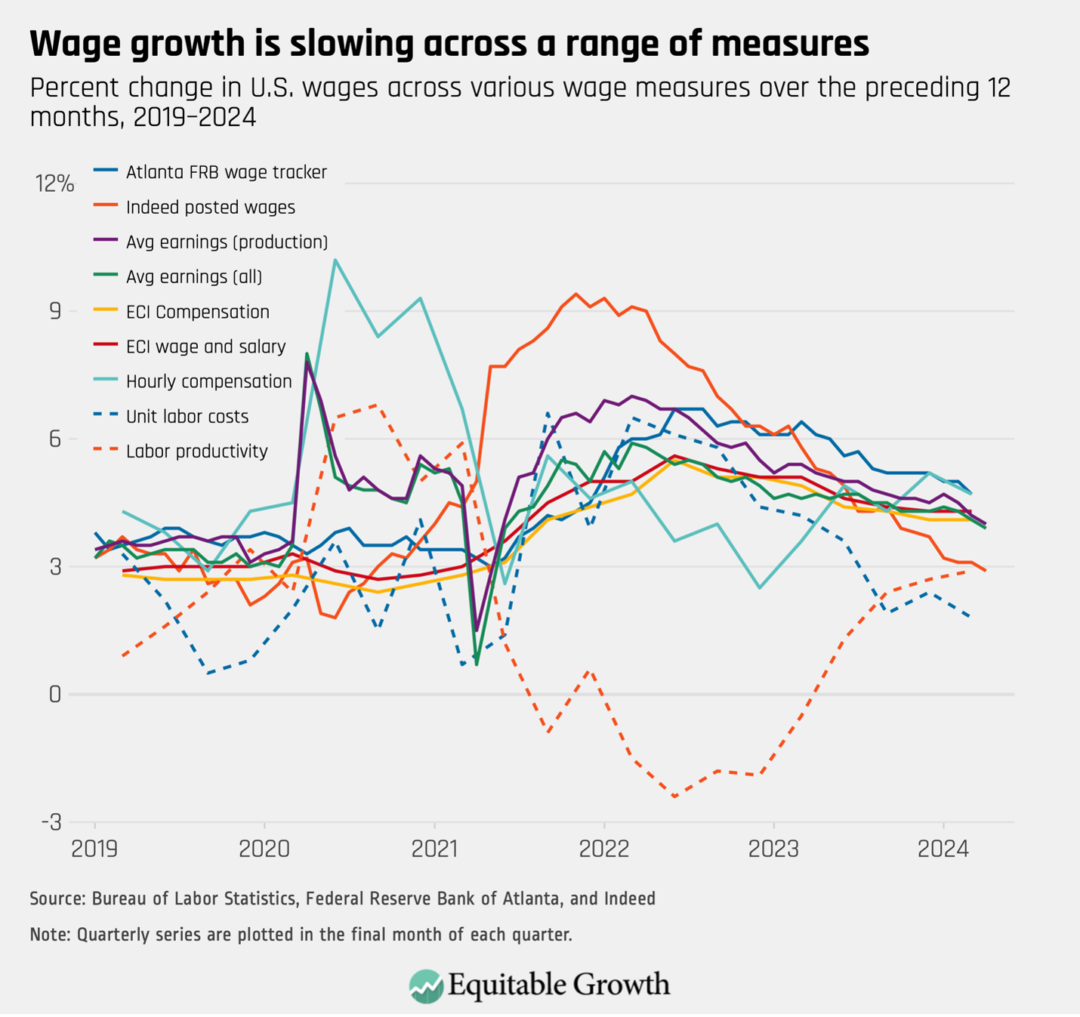
Recently, almost all of these important indicators of U.S. wage growth were updated with data through March or April of 2024 (technical changes to the underlying data have delayed the April update to the Atlanta Fed’s wage growth tracker). The new data paint a fairly consistent picture of gradually declining wage growth that, even as it goes down, remains elevated relative to pre-pandemic rates. (See Figure 1.)
Figure 1
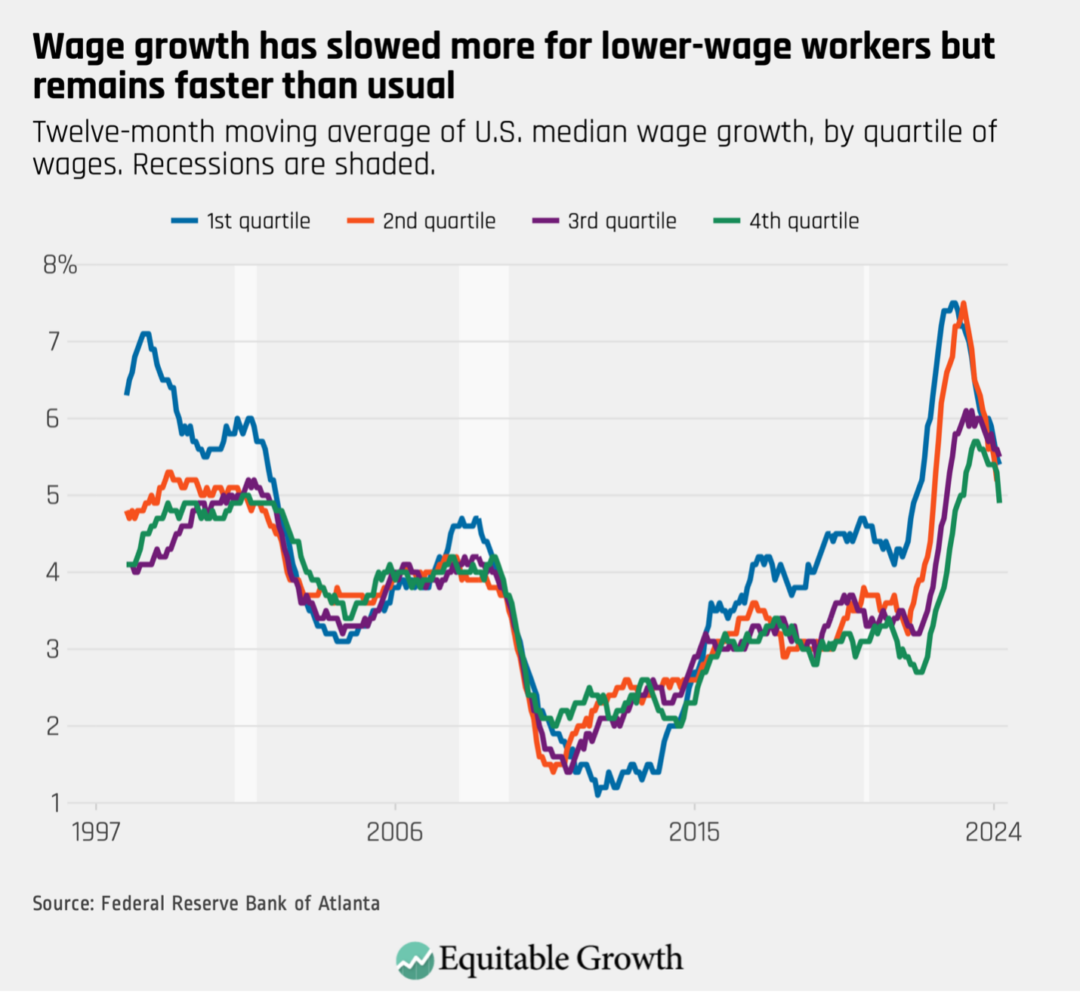
The data also show that wage growth has become somewhat less egalitarian than it was at the peak of the post-pandemic U.S. labor market, though it remains more equitable than it was prior to the pandemic. Lower-wage U.S. workers saw their wage growth accelerate relative to higher-wage workers in the second half of 2021, building on gains they made late in the recovery from the Great Recession; their wage growth is still faster than higher-wage workers, but the gap has closed. (See Figure 2.)
Figure 2
Likewise, earlier in the post-pandemic recovery, U.S. workers with only a high school diploma experienced faster wage growth than those with associate’s degrees, who, in turn, registered faster growth than those with bachelor’s degrees or higher. Now, all three groups see similar rates of wage growth, a departure from the usual advantage held by more-educated workers.
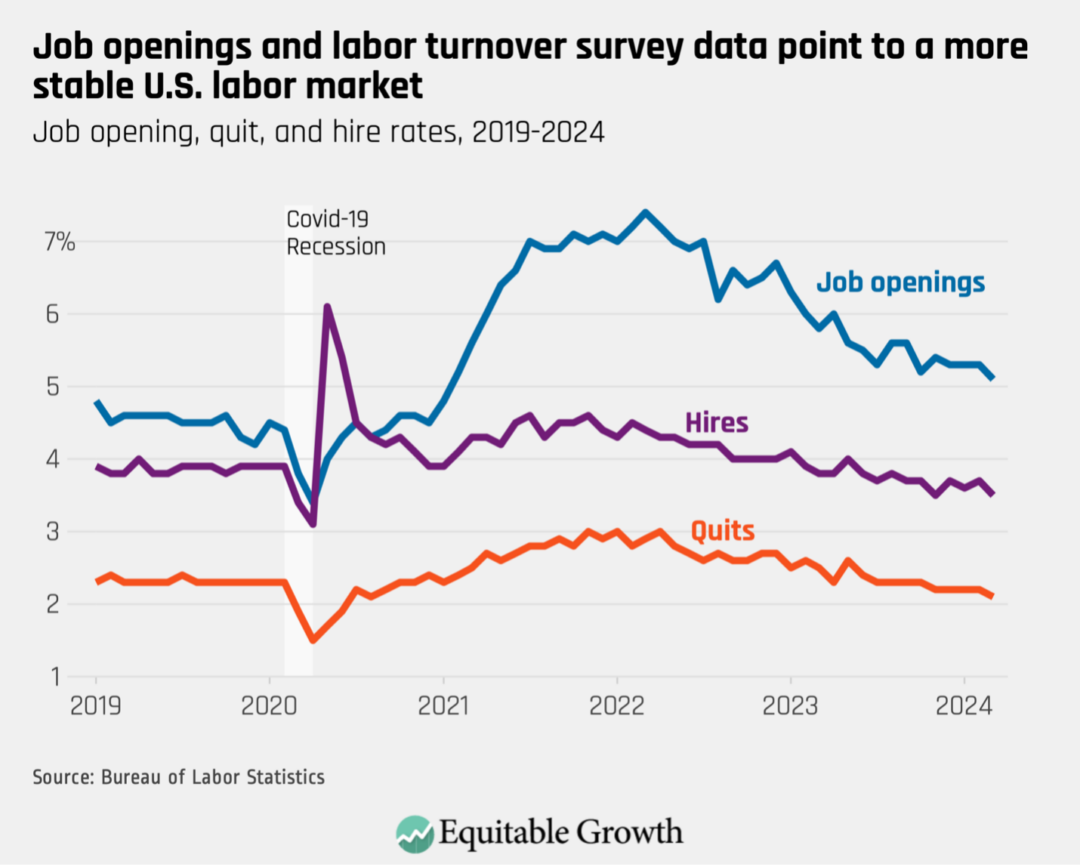
The current stability of the U.S. labor market probably makes the methodological differences between the wage measures less important, leaving each to reflect a similar underlying story of declining wage growth. Unlike over the past few years—which saw large shifts out of and back into the labor force, as well as some reallocation across job types, surrounding the onset of the COVID-19 pandemic—U.S. employment is now more stable. After peaking in 2021 and 2022, the number of open jobs is declining and the quit rate has returned to pre-pandemic levels, suggesting that workers now see fewer opportunities to change jobs than they did in the recent past. (See Figure 3.)
Figure 3
Declining U.S. wage growth is of particular interest because of its potential influence on inflation and the role it could play in informing how the Federal Reserve conducts monetary policy. Because one of the Fed’s two main goals is to maintain price stability, it quickly raised interest rates in 2022 and early 2023 in an attempt to counteract inflationary pressure in the U.S. economy. Leaving rates high after those pressures have abated, however, could risk a recession that could devastate the U.S. labor market.
From the perspective of wanting to avoid such a monetary-policy-induced recession, high wage growth (and any attendant inflationary pressure) is concerning, and so slower wage growth could be encouraging for monetary policymakers—to a point. Low-wage workers would likely bear the brunt of a recession caused by tight monetary policy aimed at reducing wage growth. Sacrificing the aspects of the current labor market that benefit these workers in the name of avoiding the possibility of a downturn would not be ideal.
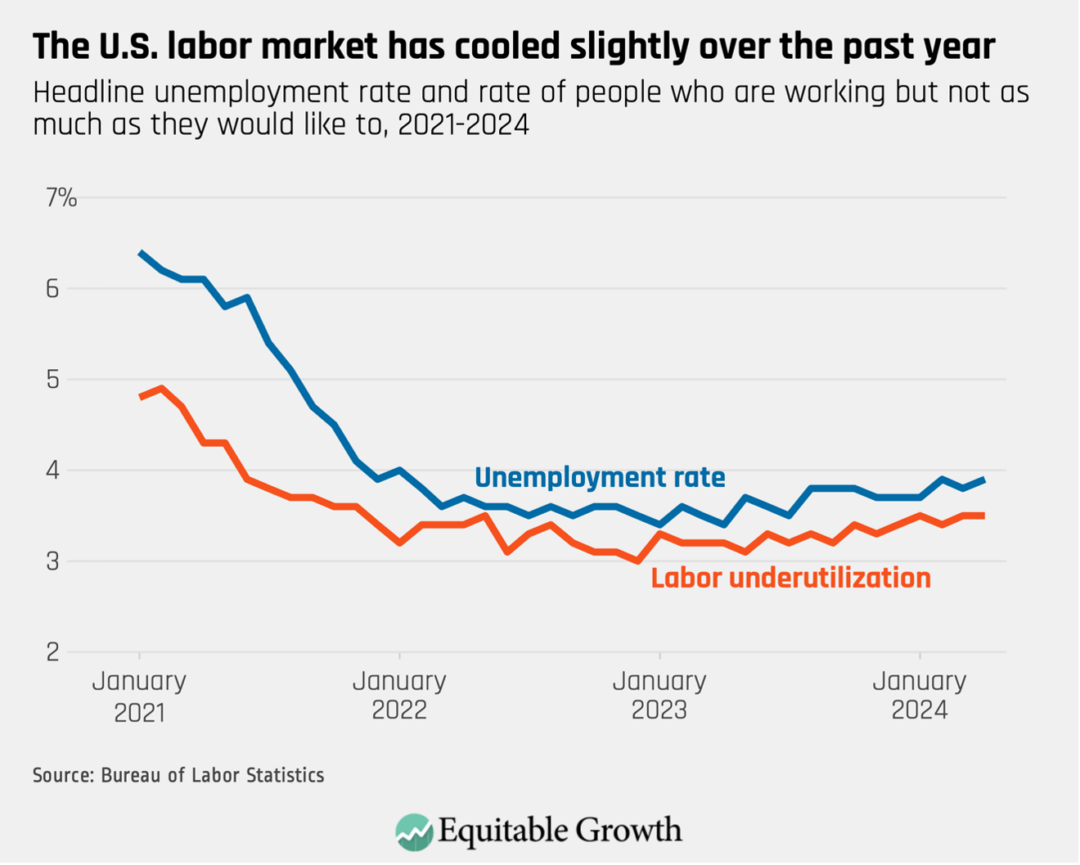
In this context, current labor market dynamics support the prospect of wage growth continuing to slow across the U.S. economy. While still low, U.S. unemployment has ticked up over the past several months, and the pool of workers not counted as unemployed but also not working as much as they would like to also has grown. (See Figure 4.)
Figure 4
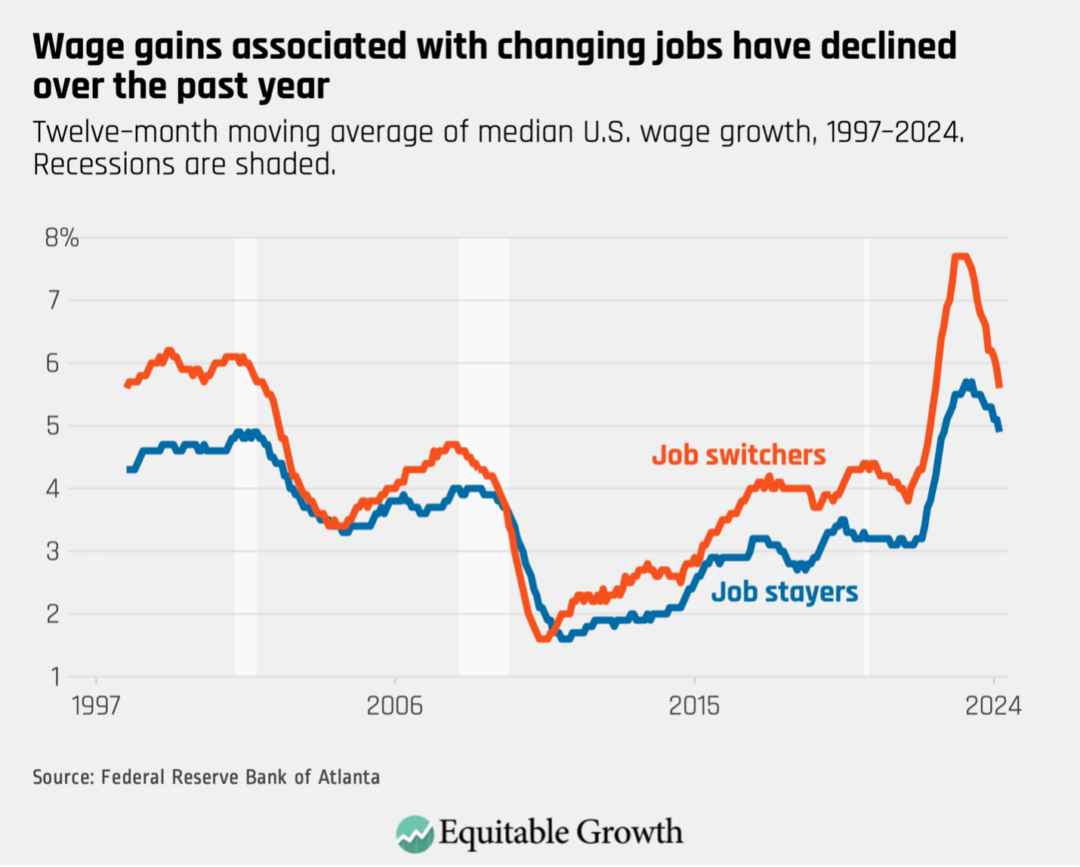
This larger group of available or underutilized workers may point toward employers not feeling the need to offer wage increases as large as they had in recent years to attract employees to their job openings. This is reflected directly in the decline in Indeed’s posted wage growth measure. The declining quit rate also could be a reflection of workers’ reduced ability to secure higher wages by changing jobs, and the Atlanta Fed’s wage tracker shows that the typical wage gain experienced by job changers has declined substantially over approximately the past year.(See Figure 5.)
Figure 5
Increased labor productivity may also be limiting some inflationary pressure from current levels of wage growth. That’s because the faster productivity grows, the faster wages can grow without adding to inflation.
Productivity growth has now rebounded, as shown in Figure 1, after substantially lagging behind wage growth for much of 2021 and 2022. The gap between wage growth and productivity growth is at roughly the levels seen in the years preceding the pandemic, when inflation was low and stable. Yet productivity growth can be volatile, and it remains to be seen whether its relationship with wage growth will fully normalize going forward.
A wide range of workers benefit from the current full employment labor market. Yet with inflation still running above the Fed’s target despite ticking down in April, there could be some tension between the benefits of the faster wage growth it creates for workers and inflationary pressures that wage growth may produce. That said, a broad range of indicators show that wage growth is declining, and rebounding productivity growth further reduces potential contributions to inflation from wage growth.
This suggests that further weakening in the U.S. labor market is not necessary to control inflation. Current labor market fundamentals are in line with those seen in 2019, a period with low and stable inflation. Sustaining this labor market should be a primary goal of policymakers. As the Federal Reserve considers when and how to adjust interest rates, it should take care to avoid unnecessarily weakening it. High interest rates are already hurting poorer workers and families. A policy-induced recession would make that pain much more widespread.
Did you find this content informative and engaging? Get updates and stay in tune with U.S. economic inequality and growth!







Stay updated on our latest research