Topic Taxes, Inequality & Growth

Taxes support U.S. living standards by providing the revenues necessary to pay for public investment in children, families, and infrastructure; for social insurance and safety net programs; for national defense; and for many other public programs that support the quality of life. They also influence the level and distribution of income, consumption, wealth, and broader measures of economic wellbeing. Equitable Growth aims to foster a robust discussion of the impact of changes in tax policy on inequality and growth and the wellbeing of families across the income distribution.

Featured work

post

The other two-tiered U.S. tax system: How pass-through businesses let the ultra-wealthy dodge federal taxes

Tax & Macroeconomics
post

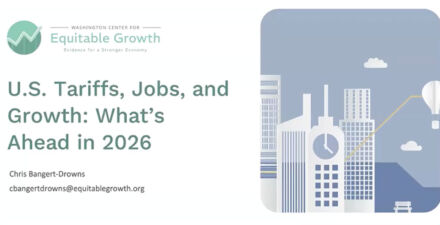
Equitable Growth event covers tariffs, tariff uncertainties, and the limits of U.S. trade policy

Tax & Macroeconomics
The Rise of Populism

How U.S. tax policies have fueled right-wing populism

Inequality & MobilityTax & Macroeconomics
post

Accounting for capital gains in income significantly increases U.S. inequality

Inequality & MobilityTax & Macroeconomics
post

Medicaid and SNAP cuts in congressional Republicans’ budget bill will negatively impact local economies

Inequality & MobilityFamiliesTax & Macroeconomics
post

The distribution of wealth in the United States and implications for a net worth tax

Inequality & MobilityTax & Macroeconomics

Explore Content in Taxes, Inequality & Growth318

Coronavirus Recession

Equitable Growth and The Hamilton Project bring together policymakers and academics to discuss how to fight the coronavirus recession

Tax & MacroeconomicsLabor
working paper

Distribution Analysis as Welfare Analysis

Tax & Macroeconomics
In Conversation

In Conversation with Mehrsa Baradaran

Inequality & MobilityTax & Macroeconomics
post

Policy options for building resilient U.S. medical supply networks

Tax & MacroeconomicsInequality & MobilityLabor
post

U.S. income inequality is worse and rising faster than policymakers probably realize

Tax & Macroeconomics
Coronavirus Recession

Good U.S. fiscal policy could have made us stronger before the coronavirus recession and can make us stronger afterward

Inequality & MobilityTax & Macroeconomics
Coronavirus Recession

Where should the marginal dollar go in U.S. fiscal policy—to testing or to the safety net—amid a pandemic-induced economic downturn?

FamiliesTax & Macroeconomics
Past Event

Webinar: Fighting the coronavirus recession and the path forward

Tax & MacroeconomicsInequality & MobilityFamilies
Equitable Recovery

The coronavirus recession and economic inequality: A roadmap to recovery and long-term structural change

LaborTax & MacroeconomicsInequality & Mobility
Coronavirus Recession

Two things state and local governments can do to mitigate the coronavirus recession in the United States

Inequality & MobilityTax & Macroeconomics
Coronavirus Recession

Coronavirus recession layoffs require reforms to the Unemployment Insurance program now to fully protect all U.S. workers

LaborTax & Macroeconomics
Vision 2020

A modest tax reform proposal to roll back federal tax policy to 1997

Tax & MacroeconomicsInequality & Mobility
Connect with us!

Explore the Equitable Growth network of experts around the country and get answers to today's most pressing questions!

Get in Touch