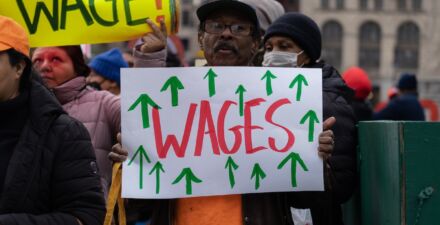
The minimum wage in the United States continues to be one of the most important policy levers for establishing a floor for job quality. Equitable Growth’s research and analysis demonstrates that higher minimum wages has the potential to increase earnings without reducing employment.
Featured work

What makes a job ‘good’? How U.S. labor market data can provide insight to improve workers’ economic conditions
March 26, 2025
March 26, 2025
A researcher’s guide to identifying policy-relevant research questions for the federal government
May 30, 2024
May 30, 2024
The state of the U.S. labor market 4 years after the start of the COVID-19 recession
March 5, 2024
March 5, 2024
New research finds $15 minimum wages raise pay and increase employment for low-wage workers
October 16, 2023
October 16, 2023
Why minimum wages are a critical tool for achieving racial justice in the U.S. labor market
October 29, 2020
October 29, 2020
Explore Content in Minimum Wage168
Minimum wages and the distribution of family incomes

March 28, 2017
March 28, 2017
The U.S. minimum wage improves access to traditional lines of credit
February 22, 2017
February 22, 2017
What U.S. Labor Department appointee Puzder doesn’t know about the minimum wage and how labor markets work
February 8, 2017
February 8, 2017
Did the minimum wage or the Great Recession reduce low-wage employment? Comments on Clemens and Wither (2016)
December 6, 2016
December 6, 2016
Delivering equitable growth: strategies for the next Administration
October 31, 2016
October 31, 2016
What are the effects of cash transfers on U.S. workers across generations?
October 20, 2016
October 20, 2016
Credible research designs for minimum wage studies

August 17, 2016
August 17, 2016
The employment effects of a much higher U.S. federal minimum wage: Lessons from other rich countries
July 28, 2016
July 28, 2016
Explore the Equitable Growth network of experts around the country and get answers to today's most pressing questions!