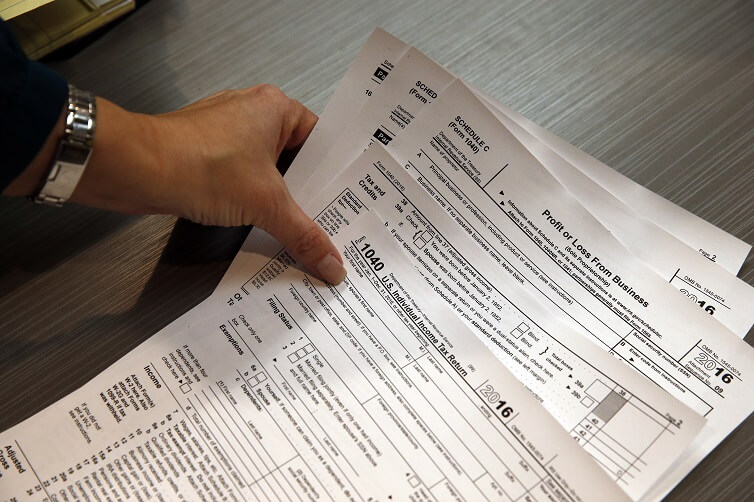
Individual income taxes and payroll taxes account for the majority of federal revenues. They raise revenues that pay for U.S. government services and do so in a progressive fashion, reducing inequality. Equitable Growth aims to foster a robust discussion of the impact of changes in individual tax policy on the well-being of families across the income distribution.
Featured work

The other two-tiered U.S. tax system: How pass-through businesses let the ultra-wealthy dodge federal taxes
April 15, 2026
April 15, 2026
Factsheet: Using asset limits in public benefit programs
March 10, 2026
March 10, 2026
Accounting for capital gains in income significantly increases U.S. inequality
July 15, 2025
July 15, 2025
The 10 worst policies for equitable economic growth in the 2025 budget reconciliation law
July 14, 2025
July 14, 2025
Explore Content in Individual Taxation168
Remembering who pays Uncle Sam this year’s Tax Day
April 4, 2017
April 4, 2017
Should the U.S. tax deduction for charitable contributions be more equitable?
March 7, 2017
March 7, 2017
House Speaker Ryan’s tax reform plan is not ready for prime time
February 28, 2017
February 28, 2017
U.S. homeownership tax policies are expensive and inequitable
January 31, 2017
January 31, 2017
Taxing the rich more: Preliminary evidence from the 2013 tax increase
November 3, 2016
November 3, 2016
Taxing the rich more—evidence from the 2013 federal tax increase
November 3, 2016
November 3, 2016
Delivering equitable growth: strategies for the next Administration
October 31, 2016
October 31, 2016
The “silver spoon” tax: how to strengthen wealth transfer taxation
October 31, 2016
October 31, 2016
The evolution of wealth inequality and social mobility in the U.S.
July 11, 2016
July 11, 2016
Explore the Equitable Growth network of experts around the country and get answers to today's most pressing questions!