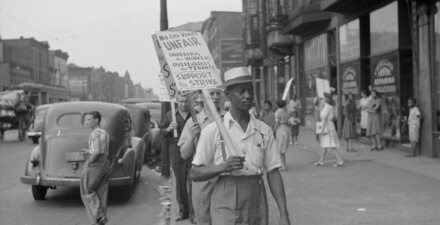
Increasing evidence demonstrates the ways in which bargaining power shapes economic outcomes. One’s economic success is not merely defined by individual characteristics such as education. Equitable Growth’s work on unions and collective action in the United States examines the ways in which institutions intersect with economic trends and individual characteristics to ensure that workers can share in the gains of the economic growth to which they contribute.
Featured work

How union contracts are protecting U.S. workers from automated management and surveillance in the workplace
March 12, 2026
March 12, 2026
Even health care, the strongest sector of the U.S. jobs market, cannot deliver the wages its workers deserve without unionization
September 10, 2025
September 10, 2025
The political implications of bad jobs and the decline of unions

May 13, 2025
May 13, 2025
Boosting U.S. worker power and voice in the AI-enabled workplace
February 19, 2025
February 19, 2025
Unions in the United States improve worker safety and lower health inequality
December 13, 2022
December 13, 2022
Factsheet: How strong unions can restore workers’ bargaining power
May 1, 2020
May 1, 2020
Explore Content in Bargaining Power392
Policymakers should ensure that the U.S. labor market recovery lasts by boosting workers’ bargaining power and strengthening social infrastructure
July 12, 2021
July 12, 2021
The future of work and worker power post-COVID a key topic at the 2021 Labor and Employment Relations Association annual conference
June 14, 2021
June 14, 2021
April Jobs report: Disappointing job gains mean the damage from the coronavirus recession may be long term, especially for young workers
May 7, 2021
May 7, 2021
Explore the Equitable Growth network of experts around the country and get answers to today's most pressing questions!