Should-Read: Dan Drezner: The politics of discomfort in the Age of Trump

Should-Read: Dan Drezner: The politics of discomfort in the Age of Trump: “It was on the plane… that I remembered… I had forgotten to upload my lecture notes for the next day…

…I couldn’t really afford to give up my computer. Which meant, if push came to shove at the CPB desk, I would need to grant access to my electronics so as to ensure I had a lecture to give the next day. That realization led to some sadness that I was so disorganized as to be unable to take a principled stand, but — and here’s the embarrassing part — I also felt some small measure of relief. I wouldn’t have to be inconvenienced. Even if actions are being taken that tarnish American exceptionalism, I wouldn’t have to resist that day. And that felt comforting….

I could manage to get through the Trump era without any personal fear of the coercive apparatus of the state intruding on my affairs — even if CPB or DHS chooses to crack down on less privileged groups. What scares me the most about the Trump administration isn’t what the federal government will do to me. What scares me is my own ability to look away if the federal government does things to more marginalized segments of the population.

Must- and Should-Reads: March 10, 2017


Interesting Reads:

Should-Read: Bill Emmott: Populism Versus Prosperity

Should-Read: Bill Emmott: Populism Versus Prosperity: “The Wake Up 2050 Index ranks the 35 mainly advanced-country members of the OECD according to their preparedness in five areas…

…demography, the knowledge society, technological innovation, globalization, and resilience…. Switzerland tops the index…. The country’s populists are a single-issue brigade–with that issue being immigration–and have far too little support to enter government…. Given Switzerland’s reputation for being wealthy, well educated, innovative, and resilient, its success in the index may not seem surprising. But with wage levels among the world’s highest and 19% of its GDP coming from manufacturing (compared with 12% in the US and 10% in the UK), it should, in theory, be highly vulnerable to Chinese competition and job-destroying automation. Yet it has largely shrugged off these challenges…. The value of long-term planning is perhaps most apparent in Japan. Despite being the advanced economy experiencing the fastest population aging, Japan scores rather well on demography…. Anticipating the demographic shift it would undergo, the country has kept more than 20% of over-65s in the workforce, compared to just 2.9% in France. The US scores worse than expected on both innovation and knowledge. Poor performance among secondary schools and a low overall labor-force participation rate…

Must-Read: Aaron Carroll: The Republicans’ “American Health Care Act”

Must-Read: Aaron Carroll: The Republicans’ “American Health Care Act”: “I’m trying to describe the bill in a few words as I can manage…

…Their continuous coverage plan could actually make adverse selection worse… [the] healthy… go[ing] without insurance… [and then paying a] one year 30% increase in premiums…. There’s a fair argument to be made that this is Obamacare Lite…. But this is still a big difference from the ACA. The subsidies shift away from the poor to others… Medicaid undergoes a huge sea change in 2020. It’s a bill. It desperately needs a CBO score.


The Republicans’ “American Health Care Act” in as Few Words as Aaron Carroll Can Manage

One Table:

Insurance Subsidies in The Republicans American Health Care Act

Twenty-Three Talking Points:

  • Medicaid:
    • The bill leaves the expansion intact–for now.
    • This bill incentivizes states to sign up as many people as possible so that they qualify for a higher match amount in 2020.
    • In 2020 Medicaid becomes a block grant program
    • Lottery winners are not eligible for Medicaid. They spent a full six pages of the bill discussing this. I have no idea why.
    • Disproportionate hospital payments are restored immediately to states that didn’t expand Medicaid, and to all states in 2020.
  • Subsidies and Costs
    • Age bands from 3:1 to 5:1.
    • If continuous coverage lapses for 63 days in a year, charged a 30% premium for 12 months.
    • Subsidies now called tax credits–they were tax credits before). But now they’re not based on how much you earn; they’re based on how old you are.
    • A 27-year-old will get $2000, a 40-year-old will get $3000, and a 60-year-old will get $4000. That’s true if they make $20,000 or $75,000.
      • Non-young poorer people are going to have a much harder time affording insurance.
      • Old rich people are in for a windfall.

*Exchanges:
* No more individual mandate or employer penalty:
* Insurance companies will hate that:
* Adverse selection.
* Made worse ironically by the 30% penalty for late enrollment. Healthy people, once they’re out, simply won’t buy coverage until they’re sick–cause you’ll get the same penalty no matter what. Death spirals much more likely.

  • Untouched:
    • Young adults can are still covered by family plans.
    • Guaranteed issue and community ratings.
    • Essential health benefits remain intact.
    • Annual and lifetime limits are still banned.
  • Aaron’s thoughts:
    • A reduction in insurance coverage.
    • No deficit reduction—unless the plan is for deep, deep cuts to future Medicaid.
    • Obamacare Lite.
    • It’s a bill. It desperately needs a CBO score.

Five Questions:

  1. Why do this?
  2. If this is a bill crafted for Reconciliation, what is the follow-on strategy for non-budgetary parts of the system?
  3. There is nothing in this bill to make it fit the Byrd Rule requirements for deficit reduction: how can it be fit into the Reconciliation box?
  4. Who—besides Republican politicians who have promised to repeal ObamaCare—wants to see this bill?
  5. Is this intended to pass? Or is this intended to be blocked by Democrats and RINOs?
Posted in Uncategorized

Weekend reading: “Time to mark this up” edition

This is a weekly post we publish on Fridays with links to articles that touch on economic inequality and growth. The first section is a round-up of what Equitable Growth published this week and the second is the work we’re highlighting from elsewhere. We won’t be the first to share these articles, but we hope by taking a look back at the whole week, we can put them in context.

Equitable Growth round-up

During the 2016 presidential campaign, then candidate Trump proposed a number of tax provisions to help families pay for childcare. Nisha Chikhale writes up new research showing how those tax benefits would disproportionately flow to high-income households.

Other sections of the tax code are also far from equitable. Using tax data, Chikhale looks at the distributional impact of the deduction for charitable contributions. They too are tilted toward high-income taxpayers.

How much is economic distress contributing to the increase in opioid addiction and abuse in the United States? A new study finds a connection between higher unemployment rates and higher death rates due to opioid abuse.

Earlier this morning the U.S. Department of Labor’s Bureau of Labor Statistics released the Employment Situation Report for February. Here’s five key graphs from today’s report from Equitable Growth staff.

Links from around the web

Women have been slowly entering into traditional male jobs over the years, but a new report shows how men are moving into predominantly female jobs. These moves are, as Claire Cain Miller reports, into low-status jobs. [the upshot]

The “China shock” research on the labor market impacts of increased Chinese imports has gotten a lot of attention in recent years and some critiques in the past few weeks. Soumaya Keynes writes that the shock literature hasn’t been debunked, but that some nuances have been added. [the economist]

Why is the labor share of income in the United States declining? The answer may lie with the changes in business concentration. Patricia Cohen looks at new research on the impact of “superstar firms” on concentration and inequality. [nyt]

Continuing a theme of his blog, Dietz Vollrath looks at research on the increase in profits, markups, and corporate savings, showing how these trends could be partially responsible for declining productivity growth. [growth economics]

Are most economists and policymakers missing a positive and important economic story in the United States right now? Derek Thompson argues the uptick in wage growth for low-wage workers in 2016 should be more appreciated. [the atlantic]

Friday figure
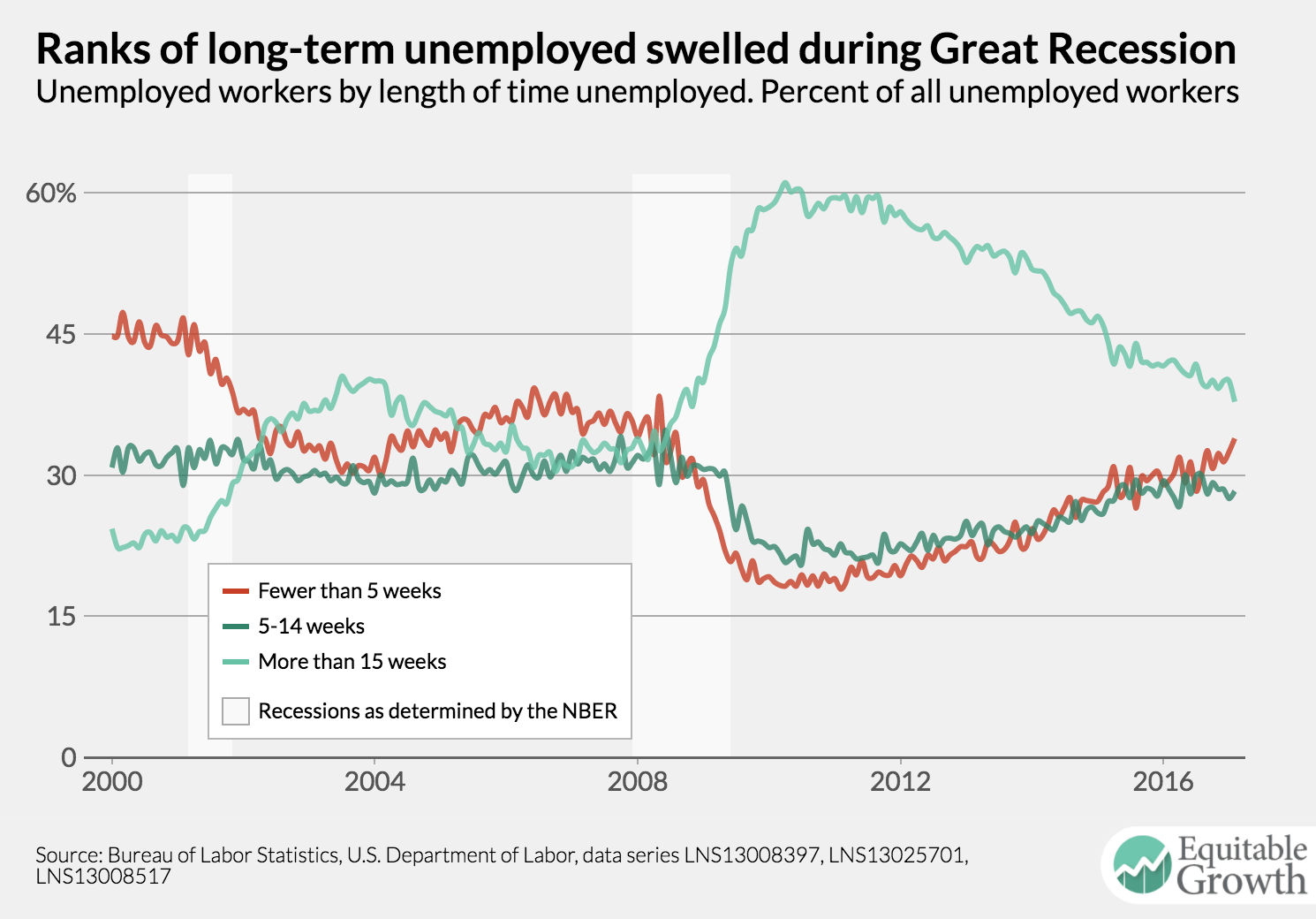
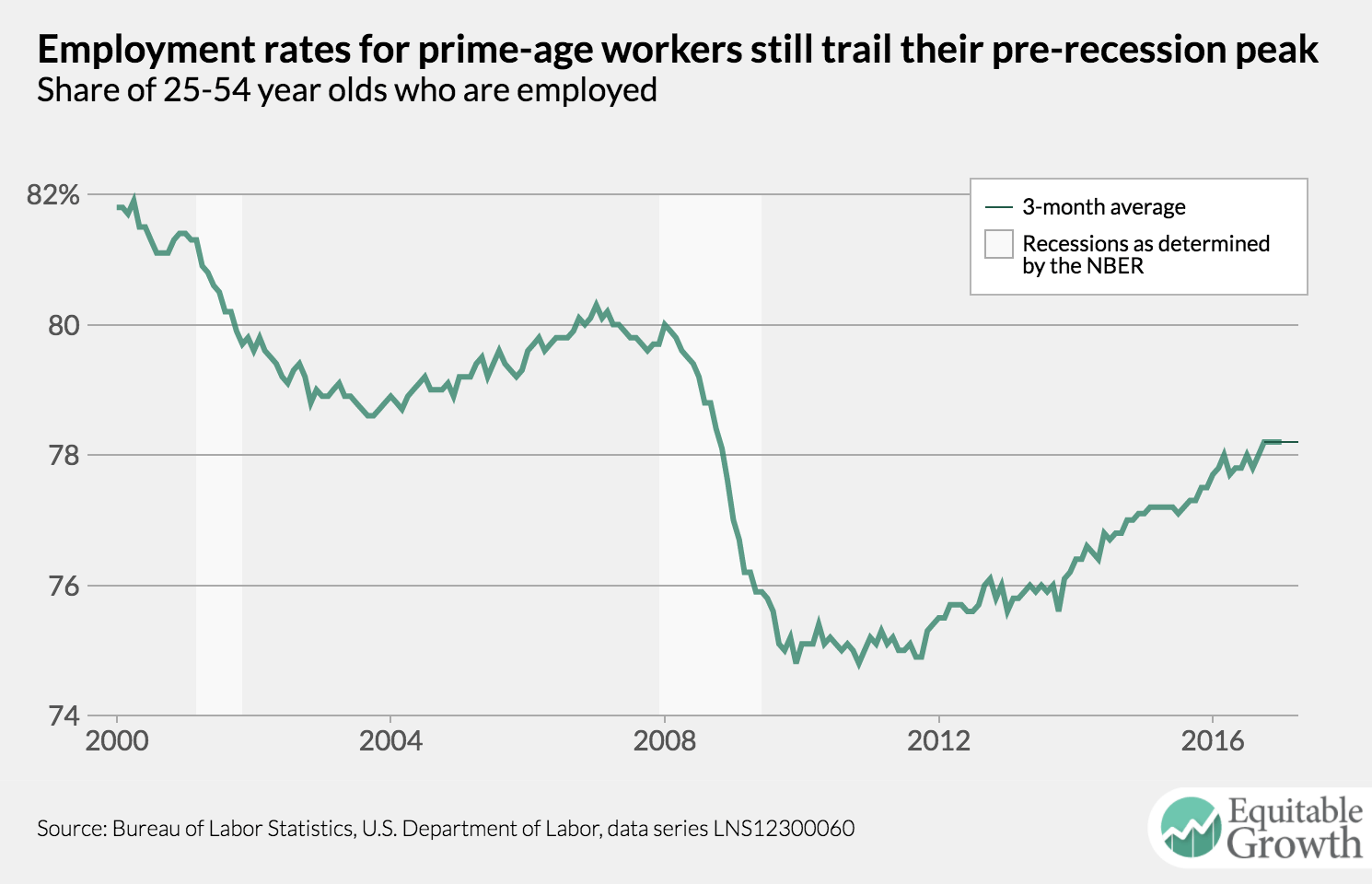
Figure from “Equitable Growth’s Jobs Day Graphs: February 2017 Report Edition” by Equitable Growth staff
Must-Read: Ezra Klein: The GOP Health Bill Doesn’t Know What Problem It’s Trying to Solve

Must-Read: Ezra Klein gets it right about the Republican Party and health care reform. Let us dispel with the illusion that these people have any intention of trying to keep America great, or make America greater:

Ezra Klein: The GOP Health Bill Doesn’t Know What Problem It’s Trying to Solve: After seven years of drafting a replacement plan, we get… this?…

…Have you read Sarah Kliff’s thorough look at the GOP Obamacare replacement? You have? Good. Some thoughts.

  1. Little in politics shocks me. The process House Republicans want to use for their health care bill does…. Committee votes… two days after releasing it, and without a Congressional Budget Office report estimating either coverage or fiscal effects….
  2. If Republicans believed the American people—or even their own legislators—would like the results of a thorough estimate of their proposal’s effects, they would have waited for one…. The GOP plan will lead to… 15 to 20 million people… los[ing] insurance…. After years of Republicans complaining that co-pays and deductibles were too high in Obamacare, co-pays and deductibles will be significantly higher…. The plan will significantly reduce taxes on the rich….
  3. The deficit—it’s hard to see any short-term reduction, and if there’s a long-term reduction, it will only be due to deep, deep Medicaid cuts…. The GOP’s main idea for reducing health care costs—ending or capping the tax break for employer-provided insurance—has been left out of this legislation. There is simply no theory of cost control in this bill at all.
  4. Adverse selection seems like a huge problem….
  5. The plan is strikingly regressive….
  6. Hypocrisy is a minor sin in politics, but still, it is remarkable how much of it there is to be found in this legislation….
  7. It is difficult to say what question, or set of questions, would lead to this bill as an answer. Were voters clamoring for a bill that cut taxes on the rich, raised premiums on the old, and cut subsidies for the poor? Will Americans be happy when 15 million people lose their health insurance and many of those remaining face higher deductibles?
  8. Nor are movement conservatives pleased….
  9. This is much more Obamacare 2.0 than I expected….
  10. All this speaks to the Republican Party’s fundamental difficulty on health care…. Suderman…. “hey don’t agree on, or in some cases even have, basic goals when it comes to health policy.”
  11. Because Republicans aren’t even trying to win Democratic votes, they’re stuck designing a bill that can wiggle through the budget reconciliation process….
  12. This bill has a lot of problems… more will come clear…. But the biggest problem this bill has is that it’s not clear why it exists. What does it make better? What is it even trying to achieve? Democrats wanted to cover more people and reduce long-term costs, and they had an argument for how their bill did both…. Republicans have neither. At best, you can say this bill makes every obvious health care metric a bit worse, but at least it cuts taxes on rich people? Is that really a winning argument in American politics?…
  13. We’re seeing… Republicans trying desperately to come up with something that would allow them to repeal and replace Obamacare… a compromise of a compromise aimed at fulfilling that promise. But “repeal and replace” is a political slogan, not a policy goal. This is a lot of political pain to endure for a bill that won’t improve many peoples’ lives, but will badly hurt millions.

Should-Read: Martin Sandbu: Globalisation Will Survive

Should-Read: Martin Sandbu: Globalisation Will Survive: “The emerging world has both a deep interest in keeping globalisation going and greater power to defend it than ever before…

…Erecting trade barriers between the US and Mexico is like building a wall in the middle of a factory floor. it would not make domestic industry more competitive. The same goes for the UK leaving the single market…. Anti-globalism cannot deliver: globalisation bears little of the blame for the west’s economic problems…. Just as agriculture feeds entire populations while employing only a tiny fraction of its workers, so manufacturing work will keep shrinking. The remaining jobs will be high-skilled, managing advanced machinery…. Blue-collar jobs… are not coming back…


On Globalization and Trade

Emerging Markets Want Globalization:

  • Globalisation has boosted emerging economies.
    • Trade helped lift more than 1bn people out of extreme poverty.
  • The emerging world has:
    • a deep interest in keeping globalisation going
    • greater power to defend it
    • will fiercely contest a return to protectionism.

International Trade Today:

  • Driven by knowledge flows.
  • Consists of cross-border supply chains.
  • Richard Baldwin: “erecting trade barriers between the US and Mexico is like building a wall in the middle of a factory floor”.
    • It would not make domestic industry more competitive.

Anti-Globalism:

  • Cannot deliver
  • The shrivelling need for manufacturing workers is the price of success at boosting manufacturing productivity.
  • Anti-globalists who promise to bring back factories are selling snake oil

Equitable Growth’s Jobs Day Graphs: February 2017 Report Edition

Earlier this morning, The U.S. Bureau of Labor Statistics released new data on the U.S. labor market during the month of February. Below are five graphs compiled by Equitable Growth staff highlighting important trends in the data.

1.

The share of workers in their prime working years with a job hit a new high for this recovery. But that peak is still well below the peaks in 2007 and 2001.

a

2.

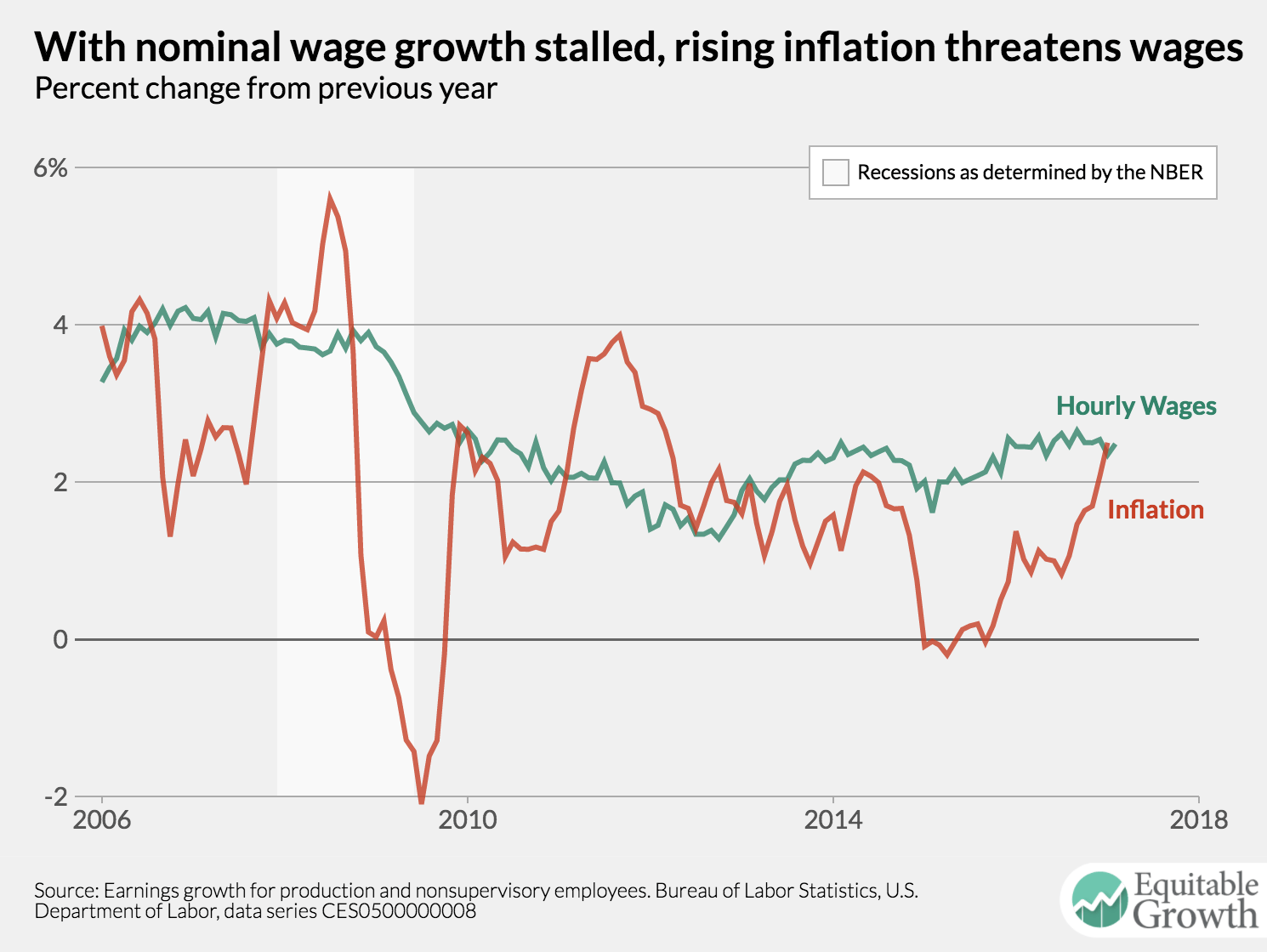
Nominal wage growth is increasing for all workers but seems stalled for lower-paid workers. With higher inflation in recent months, this means minimal real wage growth for this group.

a

3.

While long-term unemployment remains elevated, it is a declining share of unemployment as short-term unemployment increases its share.

a

4.

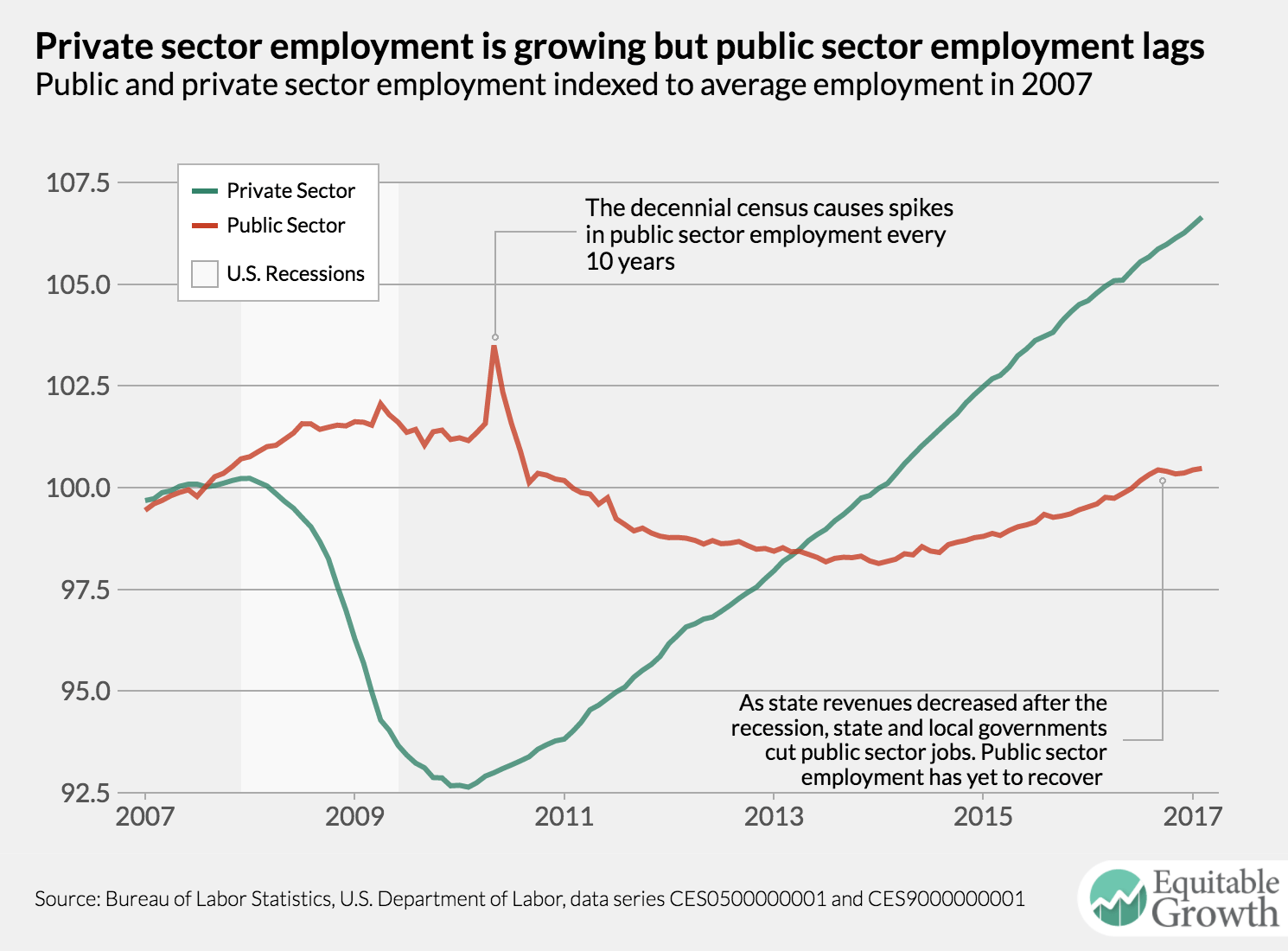
The private sector continues to lead the recovery as the government sector pulled back on jobs and hasn’t caught up.

a

5.

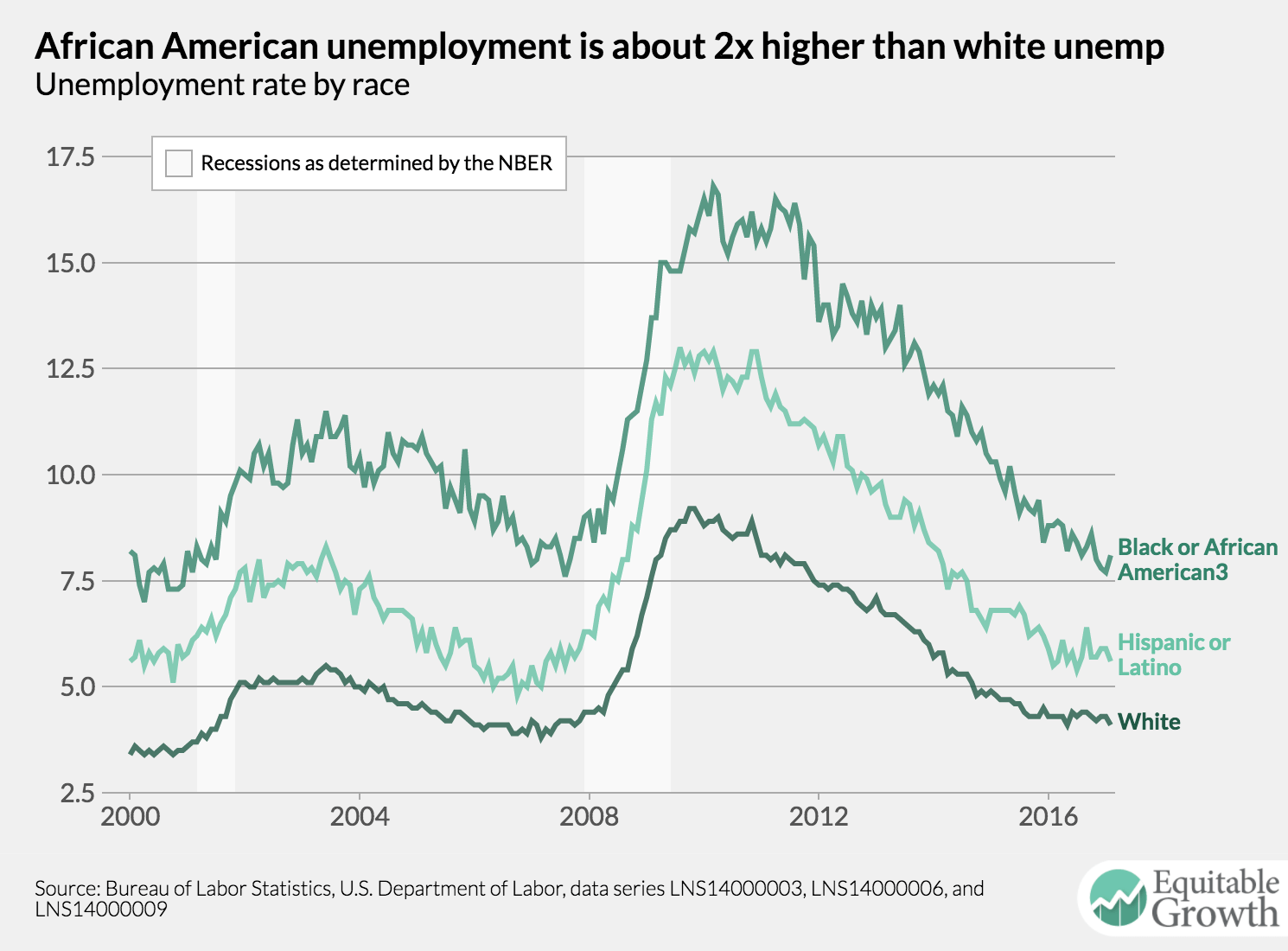
The unemployment rate for all workers is well below 5 percent, but when we argue about full employment, we have to ask, “who is at full employment?” as well.

a

Must- and Should-Reads: March 9, 2017


Interesting Reads:

Should-Read: Frank Hyman: The Confederacy Was a Con Job on Whites. And Still Is.

Should-Read: Frank Hyman: The Confederacy Was a Con Job on Whites. And Still Is.: “I’ve lived 55 years in the South, and I grew up liking the Confederate flag…

…I haven’t flown one for many decades, but for a reason that might surprise you…. As I grew up… I learned that for black folks the flutter of that flag felt like a poke in the eye with a sharp stick. And for the most prideful flag waivers, clearly that response was the point. I mean, come on. It’s a battle flag. What the flag symbolizes for blacks is enough reason to take it down. But there’s another reason…. The Confederacy =–and the slavery that spawned it–was also one big con job on the Southern, white, working class…. funded by some of the ante-bellum one-per-centers that continues today…. Forcing blacks–a third of the South’s laborers – to work without pay drove down wages for everyone else…. Thanks to the profitability of this no-wage/low-wage combination, a majority of American one-per-centers were southerners….

Most Southerners didn’t own slaves. But they were persuaded to risk their lives and limbs for the right of a few to get rich as Croesus from slavery. For their sacrifices and their votes, they earned two things before and after the Civil War. First, a very skinny slice of the immense Southern pie. And second… the shallow satisfaction of knowing that blacks had no slice at all….

The plantation owners… managed this con job partly with a propaganda technique… that falsely touted slave ownership as having benefits that would–in today’s lingo–trickle down to benefit non-slave owning whites and even blacks… [and the] notion that any gain by blacks in wages, schools or health care comes at the expense of the white working class. Today’s version of this con job… still works… the Cato Foundation, Reason magazine, Rush Limbaugh and Fox News… underwritten by pro trickle-down one-per-centers…