The One Big Beautiful Bill Act, one year later: Parsing the evidence on the law’s consequences so far
Key takeaways
- The One Big Beautiful Bill Act—the 2025 congressional budget reconciliation bill—was enacted one year ago and featured deep cuts to social programs such as the Supplemental Nutrition Assistance Program and Medicaid in order to pay for big tax breaks that largely benefitted wealthy households and corporations.
- While some of the cuts have not been fully implemented yet, research already can shed light on how the law impacts families, communities, and overall economic well-being in the United States.
- What this means for growth: Investments in people’s basic needs pay off dramatically. Every dollar spent on the Supplemental Nutrition Assistance Program reaps $1.50 in benefits, and economic evidence shows that any program that invests in children increases future U.S. economic stability and growth. With the passage of the One Big Beautiful Bill Act in 2025, families, communities, and states will have to shift resources to compensate for federal defunding of social programs, and they are likely to spend less on education and economic investment.
Overview
The One Big Beautiful Bill Act signed into law one year ago on July 4, 2025, shifted trillions of dollars in income from working-class families to corporations and very wealthy households, financed through cuts to critical government programs and by increasing the national debt. The consequences for U.S. families have begun already, and local economies are starting to feel the compounding effects.
But the structure of the law—its gradual and piecemeal phase-in and its dependence on complex changes to social program accessibility and funding structures—likely made it both easier politically to pass through Congress and harder to measure its full impact. Federal budget gimmicks used to make the law appear to cost less (such as using the so-called current policy baseline, which assumes it costs nothing to extend an existing tax cut) shifted federal funding responsibilities to states with minimal guidance on how to implement these changes.
The concurrent elimination of a key federal survey—the USDA Household Food Security Survey—that previously tracked any increases in hunger all make it more challenging to trace the harm people will face as a result of these policies. Actions that obscure the consequences of major legislation from public scrutiny set a troubling precedent for accountability and public understanding of how policy affects their livelihood.
This column looks at how the One Big Beautiful Bill Act impacts families, communities, and the U.S. economy more broadly, as well as its effects on future policymaking. But briefly, one year after its passage, the law is already causing pain and will likely only continue to do so.
OBBBA impacts on U.S. individuals and families
Components of the law phase in on different timelines, but there were a handful of nearly immediate consequences in the law’s first year. Namely, individuals and families lost access to the government income supports on which they count to meet their basic needs.
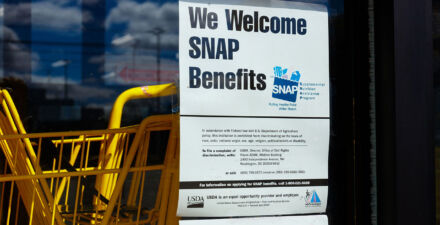
Evidence suggests that millions of Americans are less able to afford food because of the One Big Beautiful Bill Act. According to a compilation of state-by-state SNAP caseload data from the Center on Budget and Policy Priorities, enrollment in the nutrition assistance program declined by 4 million people between the law’s enactment in July 2025 and March 2026. More recent state-level data show ongoing enormous declines in SNAP enrollment: Between July 2025 and May 2026, Arizona’s enrollment declined by 50 percent, Louisiana’s declined by 21 percent, and Texas’ declined by 16 percent.
It is unlikely that these declines in SNAP enrollment reflect a reduced need for food support considering that unemployment nationwide is flat (and has only fluctuated to a minor degree at the state level), wages are not keeping pace with inflation, and food price inflation continues. Indeed, the New York Federal Reserve Bank suggests that the February 2026 Survey of Consumer Expectations shows a “remarkable increase in food insecurity.”
OBBBA negotiations were an opportunity to extend popular, effective tax credits such as the credits that made marketplace health insurance under the Affordable Care Act more affordable. These tax credits were set to expire in 2025 and were not ultimately extended in the bill. Analysis from KFF indicates that 5 million Americans are likely to drop their ACA marketplace coverage in 2026 after the expiration of the credits. Many of those who remain on marketplace insurance plans face higher monthly costs and worse coverage plans due to both the subsidy expirations and the reduction in covered individuals driving up prices for everyone else, with average monthly premiums increasing from $113 in 2025 to $178 this year.
Millions more individuals will be affected by impending cuts to Medicaid, which will begin to take effect in 2027. Recent analysis from RAND estimates 7.6 million fewer Medicaid enrollees by 2034. Medicaid changes that will lead to the loss of coverage include unprecedented paperwork requirements, frequent eligibility determinations and redeterminations, and the exclusion of nearly all immigrants. Before the law was passed, analysts assumed that certain groups of people already on Medicaid (such as those with chronic illnesses) would be exempt from the paperwork requirement process, but reporting indicates that the White House exerted influence on the Centers for Medicare and Medicaid Services in order to make the change even more harsh than expected.
Community-level OBBBA impacts
While the cuts to critical social programs in the One Big Beautiful Bill Act focus on individuals, entire communities across the United States will feel the pain. Equitable Growth grantee Robert Manduca of the University of Michigan has shown that in much of the country, a larger portion of the local economy comes from federal support of residents’ basic needs than that area’s largest traded industry. Similar to tradable goods, the dollars that flow into communities through programs such as the Supplemental Nutrition Assistance Program and Medicaid then circulate and support employment at local grocery stores and hospitals.
Meanwhile, other community supports may fall away because SNAP eligibility is often used as a proxy for determining eligibility for other social programs. The number of SNAP-eligible families in a school district, for example, can confer eligibility to an entire school for additional meal support. Children’s eligibility for free or reduced-price school meals may not have changed, but if their families lose SNAP benefits due to OBBBA changes to the program, then they will no longer have “direct certification,” and their school districts will need to spend extra staff time determining eligibility for free or reduced-price meals at schools.
In some communities, hundreds of children receive free school lunches because a high enough proportion of their classmates are eligible for SNAP benefits. This Community Eligibility Provision was specifically designed to address issues that have real economic consequences, such as low student achievement and costly local administrative burdens, by making it easier for all students to access free lunches regardless of their families’ SNAP statuses. While the final text of the One Big Beautiful Bill Act does not directly discuss school lunch programs, the result still shifts costs to the community level in the forms of more work and higher expenses for schools and budget hits to families.
The law also eliminated additional programs that receive funding via the Supplemental Nutrition Assistance Program, such as gardening, food education, and cooking programs. States that face the brunt of benefit cost-sharing next year, when these changes are fully implemented, are likely to have to pull further funding from food programs to offset the budget gaps since, by law, states must have balanced budgets.
Core community institutions will face closures because of the loss of SNAP and Medicaid dollars flowing through the food and health care systems. It is reasonable to expect closures of local grocery stores and hospitals over the next decade, with a resulting loss of jobs and negative impacts on regional economic development.
OBBBA impacts on overall economic growth
The One Big Beautiful Bill Act will have significant effects on the country’s economic growth. Every dollar cut from the Supplemental Nutrition Assistance Program, for example, takes $1.50 out of circulation in the broader economy. Research shows that supporting people’s food and health care needs, especially for children, pays off. People stay healthier longer and spend more money in their local economies. Receiving SNAP benefits also increases the long-run employment rate of people who lose their jobs.
The One Big Beautiful Bill Act makes enormous cuts to critical income supports on which Americans depend to survive. At the same time, the law is a windfall for corporations and wealthy households, making it the most regressive tax and budget law in at least 40 years. Even so, its tax cuts were not paid for. By increasing the federal budget deficit, the law not only limits the nation’s ability to invest in future needs but also drives up interest rates on mortgages, car loans, and business loans.
 post
post
 post
post
 post
post
OBBBA impacts on future policymaking and evidence gathering
Forthcoming research from Yale University scholars Patrick Sullivan and Jacob Hacker indicates that key design and rhetorical features of the 2025 law helped lawmakers hide its true consequences as it was being debated last summer. By increasing administrative burdens and paperwork requirements for eligible participants in social programs, lawmakers “increased the difficulty of tracing losses to the bill” directly. Increasing barriers to program access and changing programs’ funding mechanisms, such as shifting large portions of SNAP benefit costs from the federal government to state governments, will result in significant cuts both in terms of enrollment and benefits levels for those who are still able to access the programs.
These complex structural changes allowed lawmakers to at least rhetorically distance themselves from the consequences of their votes. It is now up to states to decipher federal guidance and implement administrative changes—and to find the space in already-tight state budgets to finance unprecedented new cost-sharing arrangements.
Furthermore, early emphasis from OBBBA proponents on its fiscally trivial yet popular components, including the “no tax on tips” provision, eroded the political salience of the law’s substantial cuts to social programs. These design and rhetorical advantages mitigated the potential for general voter backlash against these lawmakers.
Another choice used to minimize the appearance of the law’s baleful outcomes was a budget gimmick. The Republican Senate majority used the idea of a “current policy baseline” to imply that it would cost nothing to extend certain tax provisions that were set to expire in 2025. This approach effectively increased the debt further while placating some deficit-sensitive lawmakers, driving up the cost of interest for both the nation and individuals.
A simultaneous policy change by the Trump administration made future evidence gathering more challenging. Researchers, the press, and advocates rely on high-quality federal surveys and statistics to track the consequences of policy changes. But in December 2025, the U.S. Department of Agriculture ended its collection of the annual Household Food Security Survey, with a final release of data on the state of food security in 2024. Other government surveys do not collect robust food-security-related responses from as large a sample and therefore cannot be broken down to the state level. In essence, the One Big Beautiful Bill Act pushes the financial weight of its social program cuts to states while a parallel USDA decision precludes the ability to study the harms of these cuts.
Significant analytical capacity exists to project the costs and benefits of any given legislation under consideration. The Congressional Budget Office, advocates, and researchers all project the consequences of legislation and track changes after implementation begins. Yet the One Big Beautiful Bill Act’s passage and first year in effect demonstrate the limitations of that approach. If lawmakers can successfully muddy the projected consequences of their votes and then stand by as federal guidance and state implementation are even harsher than anticipated, then the evidence of those consequences is buried further away.
Conclusion
One year after its passage, the One Big Beautiful Bill Act is making life less affordable for millions of U.S. households. Hungry families have less access to food support, and ACA marketplace insurance became more expensive—sometimes prohibitively so. Further impending changes to Medicaid and nutrition assistance will have significant economic consequences for individuals, communities, and states.
Thus far, implementation guidance from the Trump administration has been faster and harsher than anticipated, with looming consequences for state budgets—which will necessitate further cuts to state initiatives that support families and that lead to longer-term state economic growth. But the mechanism of the cuts—making it more arduous and time-intensive to access the social programs for which someone is eligible and passing unprecedented administrative and benefit cost burdens to states—will make it even more challenging for communities to track the origin of their economic distress.
The author would like to thank Chris Bangert-Drowns for his research assistance.