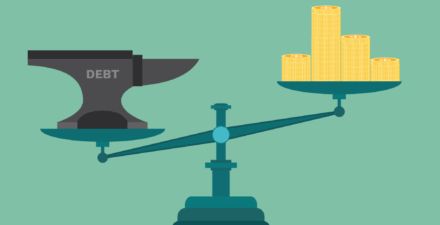
Equitable Growth’s “Econ 101” convening on Capitol Hill busts debt myths and charts a path ahead for the incoming 120th U.S. Congress

Key takeaways
- The Washington Center for Equitable Growth convened its latest “Econ 101” on Capitol Hill to present new ways of thinking about federal debt and revenue projections and how the incoming 120th U.S. Congress can engage in responsible fiscal policymaking.
- Equitable Growth policy experts presented how federal revenues fell in the 21st century due to repeated tax cuts while federal spending remained largely in line with long-time fiscal projections.
- They said that one way to holistically contextualize the federal debt problem is to use a debt-to-wealth measure rather than the traditional debt-to-Gross Domestic Product metric.
- What this means for growth: Federal policymakers may feel pressure to choose between fiscal policies that reduce the deficit and those that boost growth. Properly contextualizing the scale of the federal debt—using historical comparisons and revitalized current metrics such as the debt-to-wealth measure—will help policymakers balance competing pressures to secure long-term equitable growth.
Overview
The Washington Center for Equitable Growth recently convened an educational event for congressional staff—part of our ongoing “Econ 101” series on Capitol Hill—highlighting new ways to think about the revenue and debt problems facing the federal government as the 120th U.S. Congress prepares to begin its work in early January. Equitable Growth’s senior fellow for tax and regulatory policy, David S. Mitchell, and senior policy fellow Michael Linden led the session, covering the history of U.S. federal spending and revenue and outlining new approaches to measuring the scale of U.S. debt.
The incoming 120th Congress is likely to face pressure to rein in the mounting federal deficit and debt while crafting policies to deliver on voters’ demands on affordability, jobs, and economic growth. Policymakers may feel pressured to choose between efforts that prioritize deficit reduction and those that deliver federal resources for constituents. The Econ 101 event offered congressional staff some tools to think about the scale and impact of the federal debt and how to balance these competing fiscal pressures.
Linden began the event with a historical overview of federal revenue and spending, showing how federal projections around the turn of the 20th century anticipated a budget surplus decades into the future despite expected increases in Social Security outlays and health care spending due to demographic trends. Linden explained that today’s federal deficit and debt are almost entirely attributable to deep and frequent tax cuts over the past quarter century, not out-of-control spending—even after accounting for unexpected federal expenditures on the wars in Afghanistan and Iraq and during the Great Recession of 2007-2009 and the short but sharp COVID-19 recession in 2020.
Linden presented evidence that shows both primary spending and revenues have come in below earlier projections by the nonpartisan Congressional Budget Office, while revenues dropped more significantly. The resulting shortfall left the U.S. federal government with insufficient resources to meet its fiscal obligations.
Mitchell followed up on Linden’s historical context with a discussion of the often-cited debt-to-Gross Domestic Product metric used to track the scale of the federal debt. Mitchell identified deficiencies in that traditional metric and offered an alternative—a debt-to-wealth metric—that more comprehensively captures the scale of the debt relative to our country’s resource base. The U.S. debt-to-wealth measure has remained relatively flat in recent decades, as growth in the debt has been offset by large increases in total private wealth.
Importantly, Mitchell argues that the United States doesn’t necessarily need to wait for a wealth tax to tackle the federal debt problem. The country’s private wealth—particularly the wealth held by the richest Americans—can be tapped by shoring up existing tools including an increase in the capital gains tax, closing some capital gains tax loopholes, and raising corporate taxes.
Linden and Mitchell then fielded questions from the roughly 40 congressional staffers in attendance. The two Equitable Growth panelists and the audience discussed the implications of the failed wealth tax referendum in California, dove into the weeds on closing capital gains loopholes, and considered the various ways that congressional staff could apply the debt-to-wealth measure when crafting fiscal policies on the Hill.
This Econ 101 is part of our ongoing series of Hill educational events hosted by Equitable Growth. Future topics are expected to include tariffs and trade, and how paid family and medical leave and other policies can improve job quality and contribute to economic growth.
Review the presentation slides from the November 17 Econ 101 briefing to learn more.
Did you find this content informative and engaging?
Get updates and stay in tune with U.S. economic inequality and growth!





Stay updated on our latest research