Equitable Growth’s Jobs Day Graphs: September 2022 Report Edition

On October 7, the U.S. Bureau of Labor Statistics released new data on the U.S. labor market during the month of September. Below are five graphs compiled by Equitable Growth staff highlighting important trends in the data.

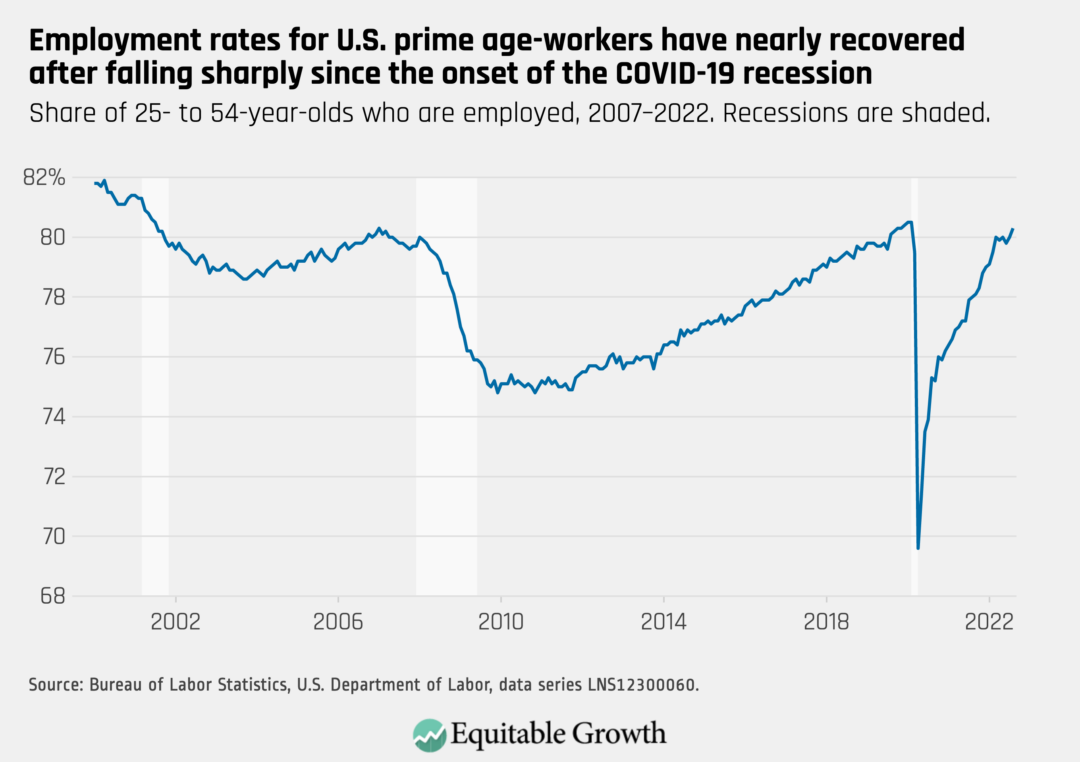
The employment rate for prime-age workers declined to 80.2 percent in September 2022 from 80.3 percent in August, with total nonfarm employment rising by 263,000.
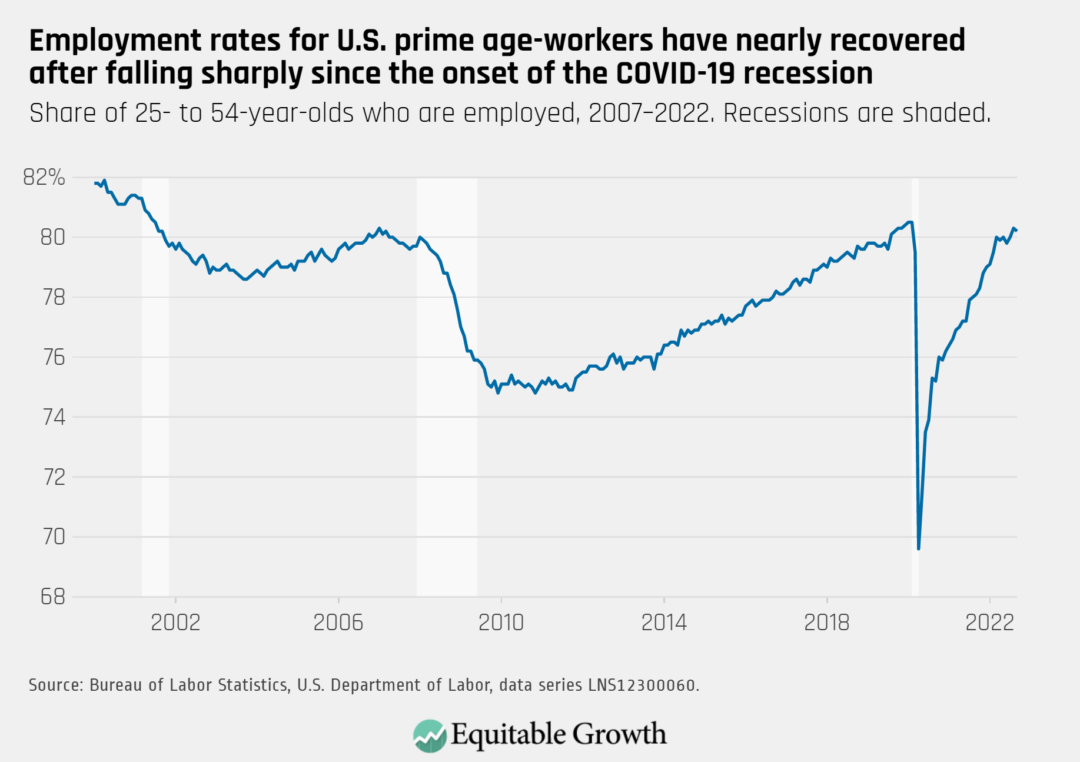
Share of 25- to 54-year-olds who are employed, 2007–2022. Recessions are shaded.

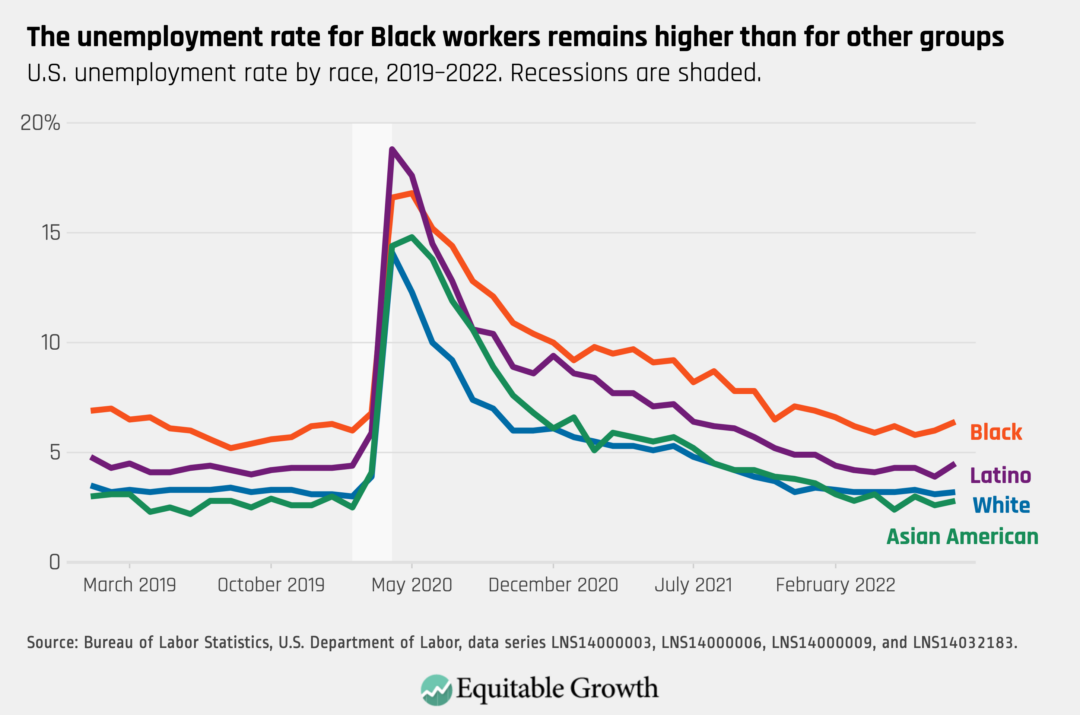
The unemployment rate decreased to 3.5 percent in September and remains higher for Black workers (5.8 percent) and Latino workers (3.8 percent), compared to White workers (3.1 percent) and Asian American workers (2.5 percent).
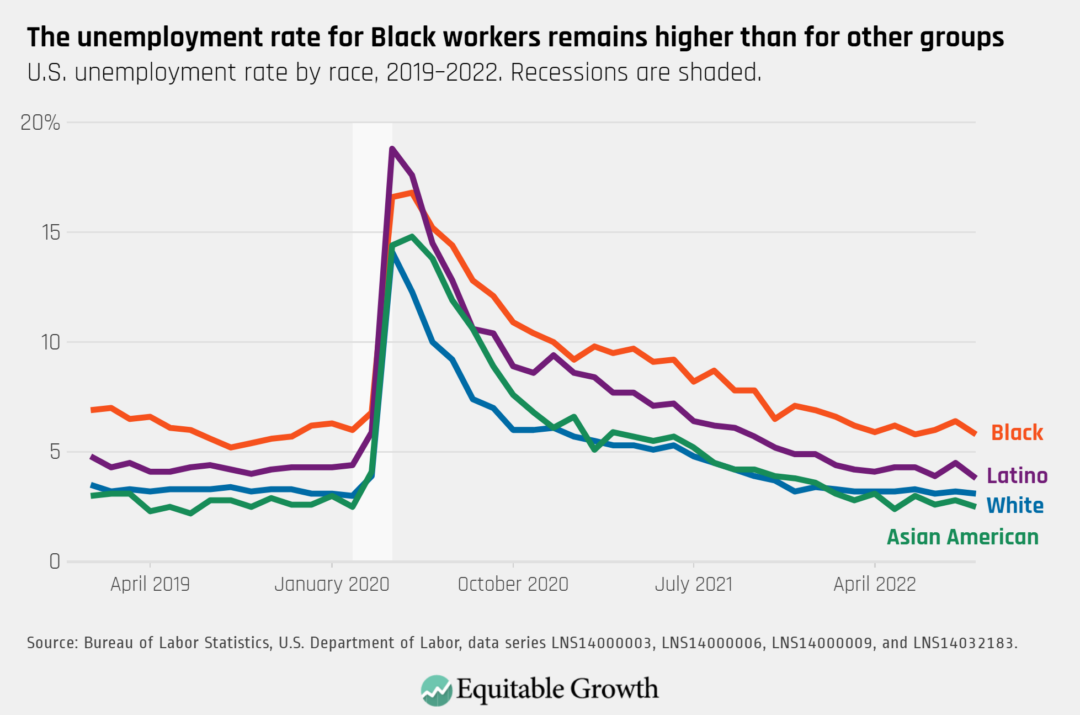
U.S. unemployment rate by race, 2019–2022. Recessions are shaded.

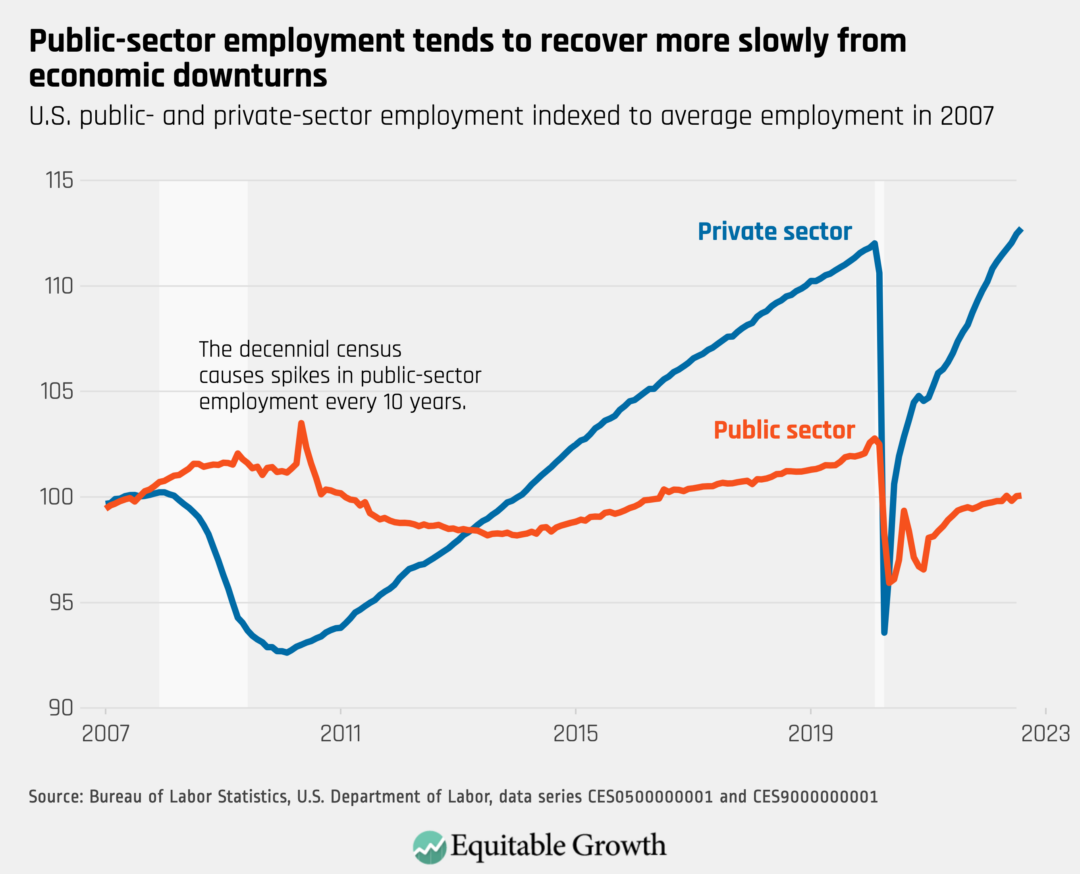
Private-sector employment continued to rise in September, while public-sector employment declined slightly and remains below pre-pandemic levels.
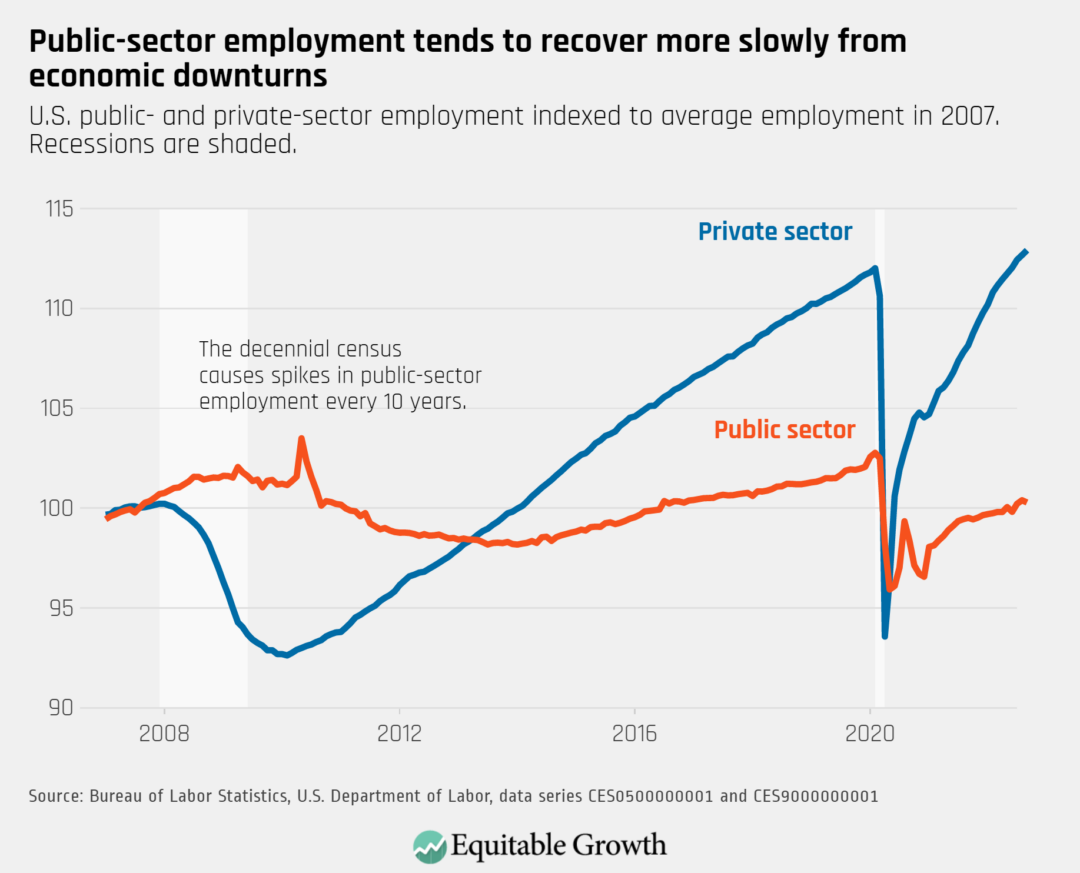
U.S. public- and private-sector employment indexed to average employment in 2007

Nominal wage growth (not accounting for inflation) cooled in September, with average hourly earnings growth at 5 percent over the past 12 months.
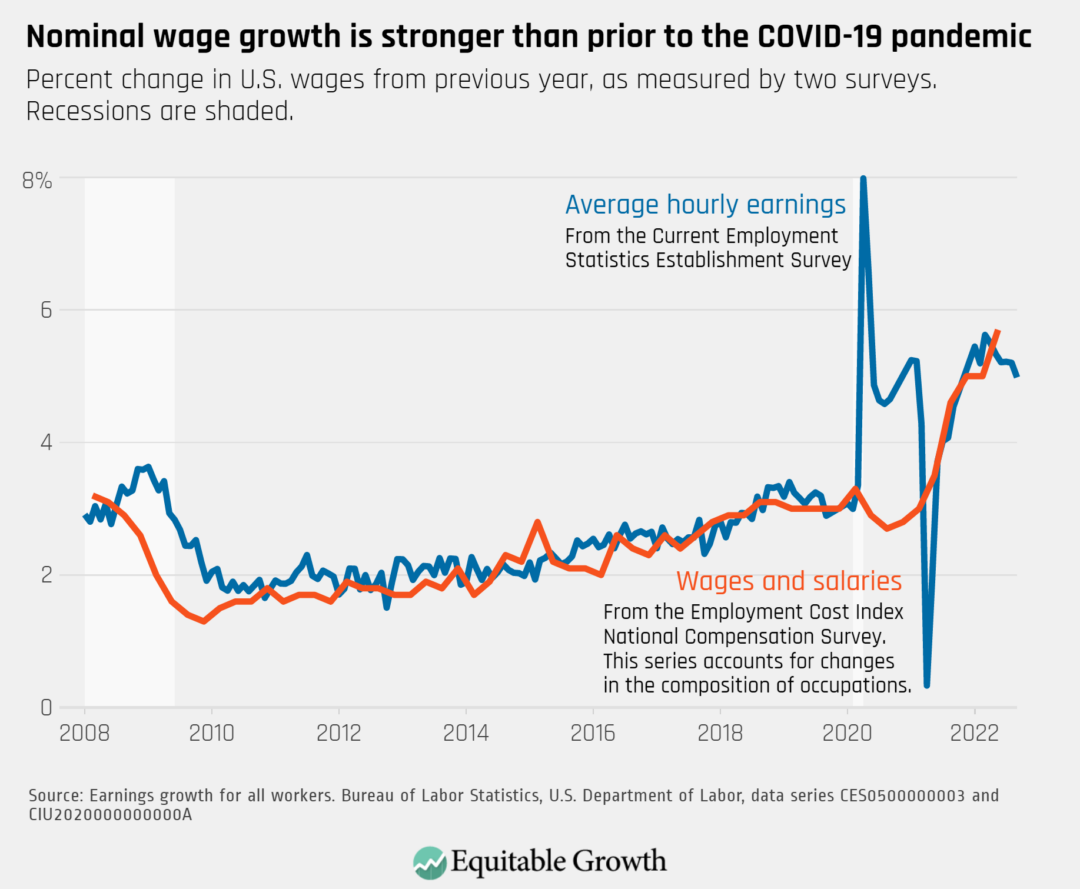
Percent change in U.S. wages from previous year, as measured by two surveys. Recessions are shaded.

The number of unemployed workers decreased in September. The share who are unemployed due to job loss fell to 30.5 percent, and 13.3 percent have been temporarily laid off; 15.9 percent left their jobs, 32.4 percent are re-entering the labor force, and 7.9 percent are new entrants.
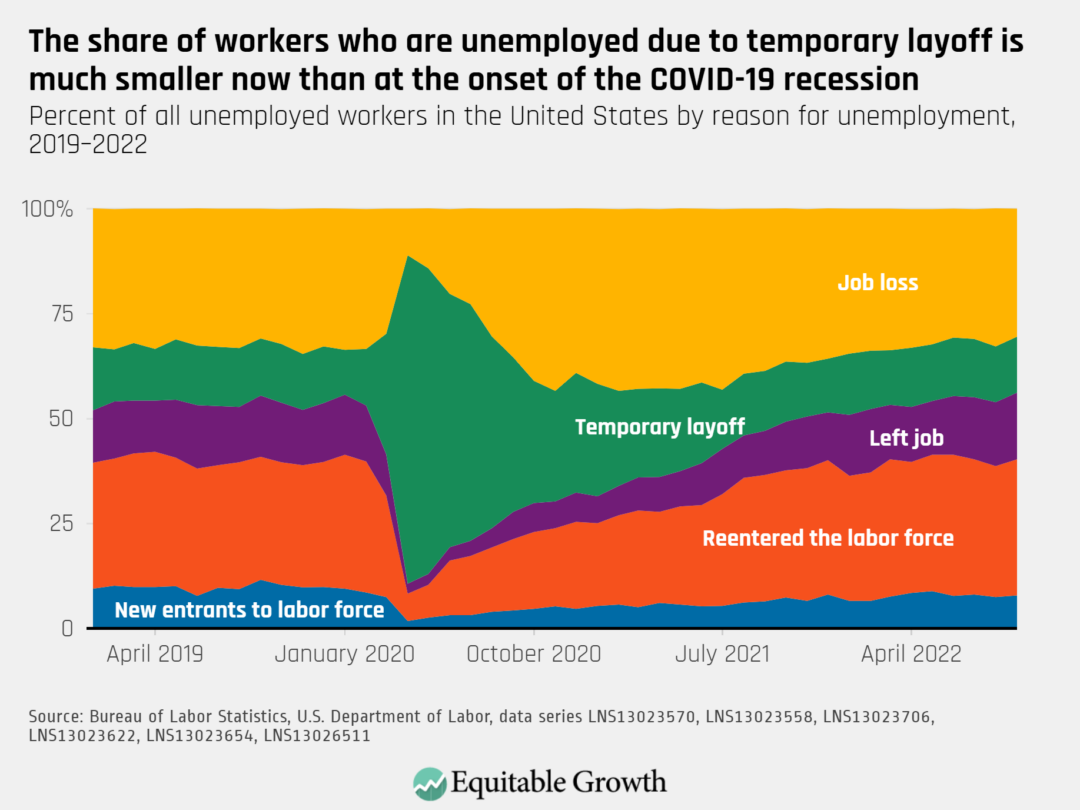
Percent of all unemployed workers in the United States by reason for unemployment, 2019–2022

Equitable Growth’s Jobs Day Graphs: August 2022 Report Edition

On September 2, the U.S. Bureau of Labor Statistics released new data on the U.S. labor market during the month of August. Below are five graphs compiled by Equitable Growth staff highlighting important trends in the data.

Total nonfarm employment rose by 315,000 in August, and the employment rate for prime-age workers increased to 80.3 percent.

Private-sector employment continued to rise in August, while public-sector employment has recovered more slowly and remains below pre-pandemic levels.

The unemployment rate increased to 3.7 percent in August and remains higher for Black workers (6.4 percent) and Latino workers (4.5 percent), compared to White workers (3.2 percent) and Asian American workers (2.8 percent).

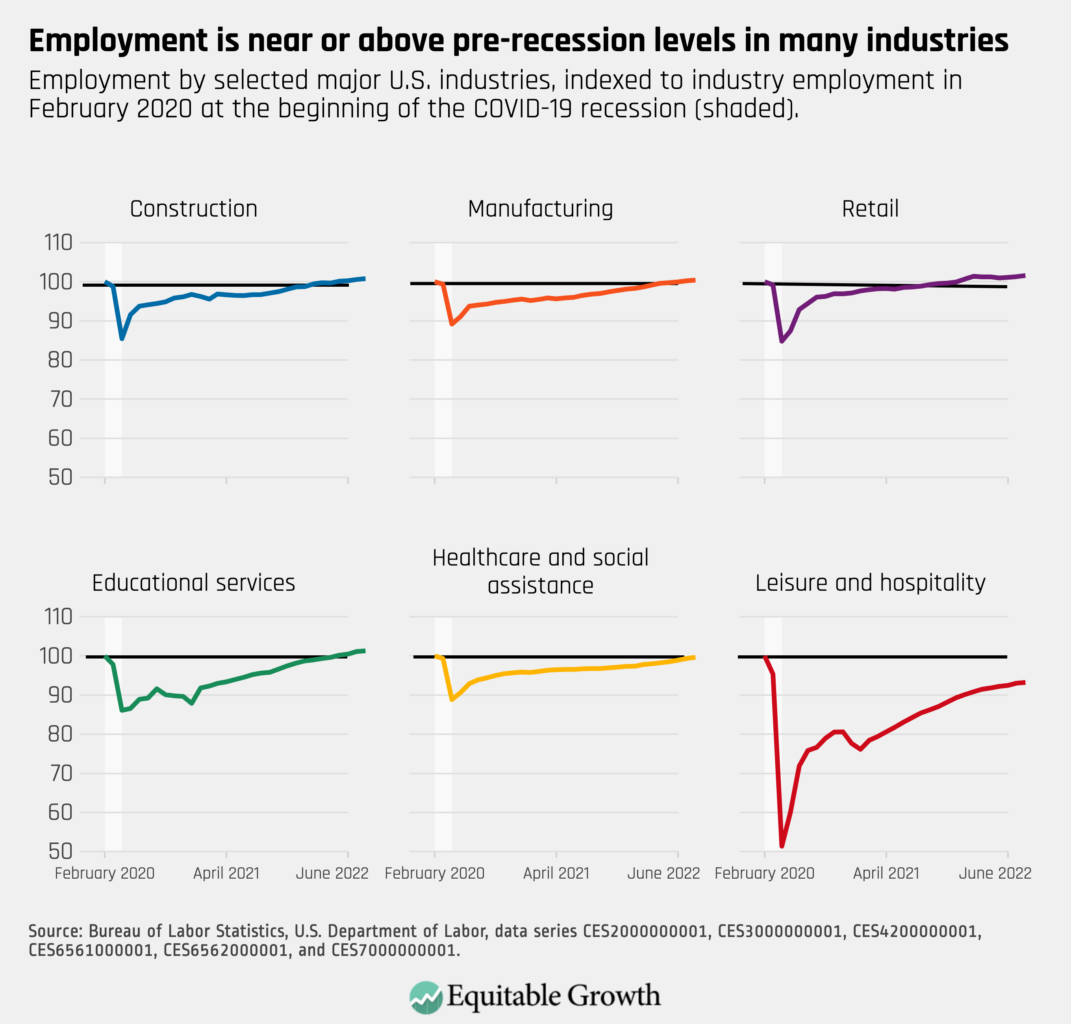
Employment in many sectors is now back to or surpassing pre-pandemic levels, including construction, retail, and educational services, but employment in leisure and hospitality has yet to recover.

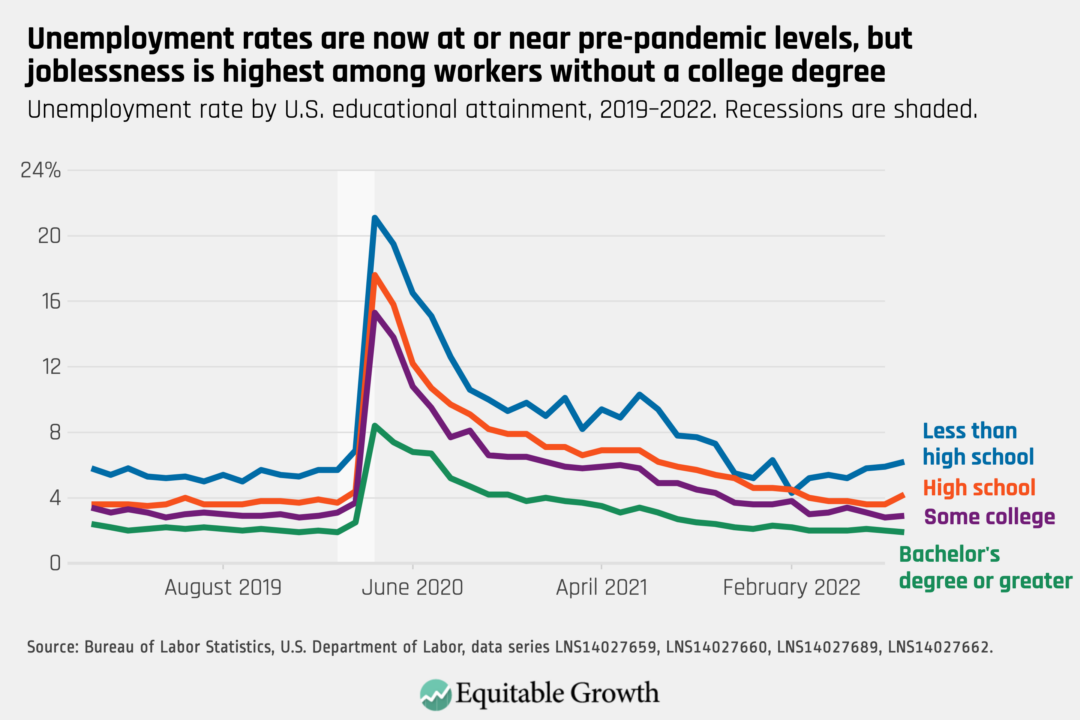
The unemployment rate rose to 6.2 percent for workers with less than a high school degree and 4.2 percent for high school graduates, but is just 2.9 percent for workers with some college and 1.9 percent for college graduates.